Refractory castables in steelmaking and foundry service face thermal cycling, molten metal, aggressive slag and mechanical impact. Thermal stress, penetration, corrosion and spalling often develop together.
Natural flake graphite is added because its thermal properties and poor wettability by many molten materials can reduce several of these risks. Performance still depends on grade, particle size, oxidation control and dispersion.
What Are Refractory Castables?
Refractory castables are monolithic materials made from aggregates, powders, binders and additives. They are mixed with water and installed by pouring, vibration, pumping or gunning.
They form continuous linings with fewer joints than bricks and are widely used in steel ladles, tundishes, electric arc furnaces, blast furnace troughs and foundry vessels.
Carbon-containing castables are commonly selected for demanding refractory and metallurgical applications involving molten metal, aggressive slag or severe thermal cycling. Graphite acts as a functional component rather than the main aggregate.
What Makes Natural Flake Graphite Suitable for Refractory Applications?
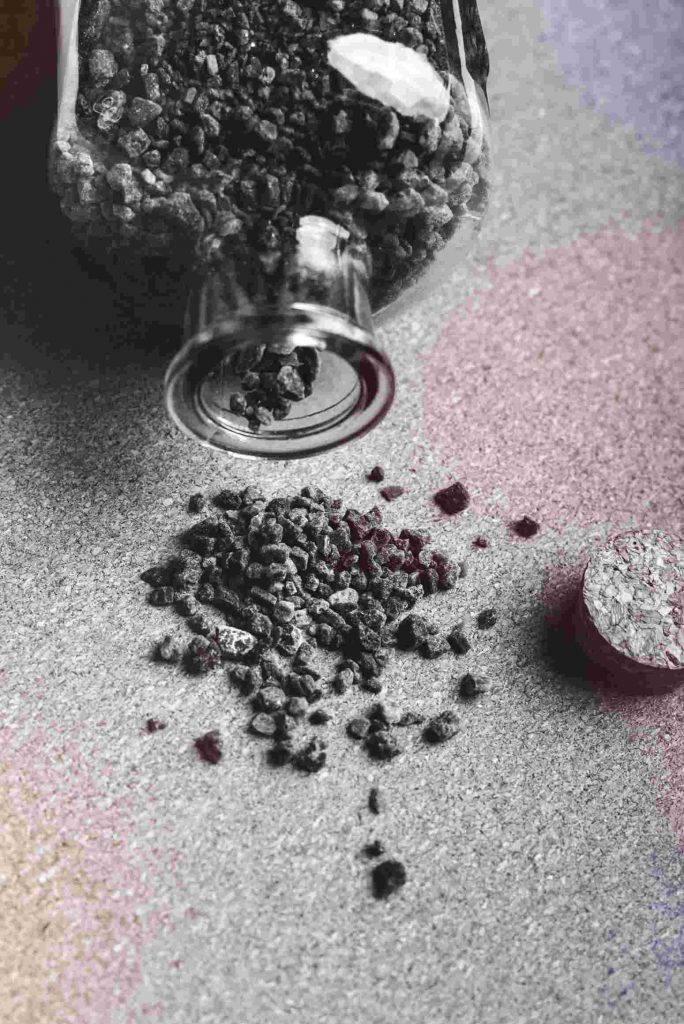
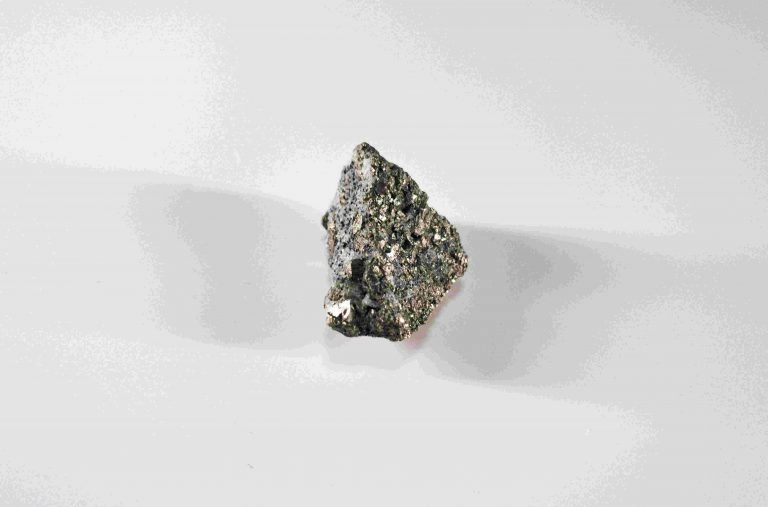
Natural flake graphite consists of carbon atoms arranged in strongly bonded layers, providing thermal conductivity, low thermal expansion and stability in many non-oxidizing environments.
Graphite is also poorly wetted by many molten metals and slags. When properly distributed, it can reduce the tendency of liquid phases to spread through pores and microcracks.
Flake morphology matters. Thin particles can form a dispersed carbon phase around aggregates and fine components. Results depend on fixed carbon, mineral impurities, particle size distribution and mixing quality. Because graphite is hydrophobic, dispersion must be considered during castable design.
Key Benefits of Natural Flake Graphite in Refractory Castables
1. Improved Thermal Shock Resistance
Thermal shock develops when parts of a lining heat or cool at different rates. The resulting temperature gradients create internal stress and cracking.
Graphite conducts heat through the matrix, reducing local temperature differences. Its low thermal expansion also limits dimensional change. This makes graphite for refractory castables useful in equipment exposed to repeated tapping, shutdown and reheating.
Graphite does not eliminate thermal stress, but a balanced addition can make the lining less sensitive to rapid temperature changes.
2. Reduced Penetration by Molten Metal and Slag
Open pores and microcracks provide pathways for molten metal and slag. Once inside, these liquids may react with fine components, dissolve bonding phases or solidify within pores.
Natural flake graphite is difficult for many molten materials to wet. A well distributed carbon phase can therefore reduce liquid spreading through the pore network.
The effect depends on slag chemistry, temperature, oxygen potential and refractory composition. Graphite is a penetration control component, not a complete barrier.
3. Better Resistance to Chemical Corrosion
Refractory corrosion involves dissolution of oxide grains, reaction with slag constituents and movement of liquid phases into the matrix. Attack accelerates when slag wets the lining and penetrates deeply.
A carbon containing phase can reduce contact between aggressive liquids and reactive oxide components. Lower wettability may slow infiltration and limit the depth of attack.
Graphite cannot compensate for an unsuitable base refractory. Aggregate chemistry, binder selection, carbon level and antioxidant system must be engineered together.
4. Improved Resistance to Spalling
Spalling is the separation of chips or larger sections from the hot face. It may result from thermal gradients, structural stress, chemical alteration or expansion of penetrated material.
Graphite can reduce several driving forces. Better heat distribution lowers thermal stress, while reduced penetration helps preserve the matrix.
Installation remains critical. Excess water, poor vibration, inadequate curing or rapid dry out can create defects that graphite cannot correct.
5. Potentially Longer Refractory Service Life
Longer lining life results from slower crack growth, lower penetration, reduced corrosion and better tolerance of operating cycles.
Correctly selected and dispersed natural flake graphite may reduce hot face degradation, repair frequency and refractory consumption. Service life still depends on furnace design, slag control, heating practice and installation quality. Graphite improves a sound formulation; it does not replace disciplined refractory engineering.
Natural Flake Graphite vs. Other Carbon Sources
Refractory producers may use natural flake graphite, amorphous graphite, synthetic graphite, carbon black or petroleum derived carbon. Each has a different structure, impurity profile, surface area, oxidation behavior and cost.
Natural flake graphite combines a developed crystalline structure with useful thermal conductivity and available carbon and mesh grades. It has lower surface area than carbon black and may offer better economics than synthetic graphite where ultra high purity is unnecessary.
Natural graphite for refractories should be selected on total formulation performance, not carbon percentage alone.
How to Select Natural Flake Graphite for Refractory Castables
Fixed Carbon Content
Fixed carbon indicates the carbon remaining after moisture, volatile matter and mineral residue are accounted for. A higher fixed carbon grade normally introduces less ash, but the highest purity is not always the most economical choice. Selection should reflect impurity limits, slag exposure, operating conditions and cost.
Particle Size
Particle size affects dispersion, packing, surface area, oxidation behavior and interaction with the matrix. Fine graphite distributes broadly but exposes more surface area. Coarser flakes retain more of their original morphology but may be harder to distribute uniformly.
Buyers should review the full sieve specification, including oversize and undersize limits, rather than relying only on a nominal description such as “200 mesh graphite.”
Ash and Moisture
Ash is the non-carbon mineral fraction of graphite. Its chemistry can influence refractoriness, slag reaction and high temperature performance. Moisture affects weighing accuracy, storage and batch consistency.
A certificate of analysis should report fixed carbon, ash, moisture, volatile matter and particle size data.
Batch Consistency
Refractory production depends on repeatable mixing and installation behavior. Variations in graphite purity, moisture or particle size distribution can change water demand, flow and final properties.
For bulk purchasing, consistency across shipments is often more valuable than a small improvement in one parameter. Qualification should include sample trials and routine batch verification.
The Importance of Oxidation Control
Graphite performs well at high temperature when oxygen exposure is limited, but it oxidizes in oxygen containing atmospheres. Carbon loss increases porosity and reduces the non-wetting phase.
Carbon containing castables may therefore use antioxidants or other protective measures. The system depends on temperature, atmosphere, binder chemistry and installation method. Controlled curing and dry out are also important because early cracking exposes more graphite to oxygen.
Graphite selection should be evaluated as part of the complete castable system.
Why Source Refractory Graphite from PERMANENT MINERALS?
PERMANENT MINERALS supplies natural flake graphite from Tanzania for industrial applications. Its range includes medium and high carbon grades and multiple particle size specifications.
Processing capabilities covering crushing, flotation, drying and screening allow discussions to focus on carbon, mesh range, packaging, order volume and destination. For refractory producers, the objective is to secure a repeatable raw material that fits the process and performance target.
Successful use depends on matching fixed carbon, ash, particle size distribution and oxidation protection to the refractory design.
Looking for natural flake graphite for refractory or metallurgical applications?
Contact PERMANENT MINERALS to discuss your required fixed carbon content, particle size, order volume and destination.
Frequently Asked Questions
Q: What type of graphite is used in refractory castables?
Natural flake graphite, synthetic graphite and other carbon materials may be used, depending on service conditions and cost.
Q: What carbon content is suitable for refractory graphite?
There is no universal requirement. The correct grade depends on impurity limits, service conditions, target performance and economics.
Q: Why does graphite reduce slag penetration?
Many slags and molten metals do not readily wet graphite, reducing liquid spreading through the pore structure.
Q: Does particle size matter in refractory graphite?
Yes. It affects dispersion, packing, oxidation behavior and mixing consistency. Confirm the preferred mesh range through formulation trials.