
Buying natural graphite looks simple on a quotation sheet: carbon content, mesh size, price per ton, delivery term. Yet two products carrying the same grade name can behave very differently in a refractory mix, foundry coating, lubricant, or sealing compound.
Ore source, beneficiation, drying, screening, and sampling all affect the final material. A low price disappears quickly when unstable particle distribution or excess ash forces production adjustments.
What Product Specifications Should a Natural Graphite Supplier Provide?
A supplier should describe the material in measurable terms. “Fine powder” is not enough. The specification must match the way the material will actually be used.
Fixed Carbon and Impurity Levels
Fixed carbon is usually the first number buyers check, but it should not be read alone. Ash, moisture, volatile matter, sulfur, iron, and other impurities can affect processing and finished product performance.
A refractory producer may accept a wider impurity range than a conductive coating manufacturer. A foundry coating can become unstable when moisture drifts. The correct limit depends on the process, not on the assumption that higher purity is always better.
Ask how fixed carbon is tested and whether the reported value is typical, minimum, or guaranteed. A grade listed as 95% carbon may routinely test above that figure, or it may move around the limit. Both can appear under the same product name.
Flake Size, Mesh Size and Particle Distribution
Mesh size tells only part of the story. Buyers should also check particle size distribution, oversize, undersize, and screen residue.
A 200 mesh powder may have a narrow distribution or contain a broad mix of coarse and very fine particles. Those materials will not disperse the same way. Excess fines can change lubricant viscosity. Coarse particles may settle faster in foundry coatings. In refractory products, flake size can affect packing and oxidation behavior.
For tighter applications, request actual particle distribution data rather than relying on one mesh designation.
How Can Buyers Verify Graphite Quality and Batch Consistency?
Specifications describe the target. Quality records show whether production reaches it. This is where supplier reviews often become too casual.
Request a Certificate of Analysis
A batch specific Certificate of Analysis should include:
- Fixed carbon
- Ash and moisture
- Particle size or mesh result
- Relevant impurity levels
- Batch number and test date
The batch number should match the packaging and shipping documents. Document mismatches are surprisingly common in bulk mineral trade.
Ask whether every batch is tested or the supplier relies on periodic averages. Third party analysis may be appropriate during qualification or when contract limits are tight.
Compare Samples with Commercial Shipments
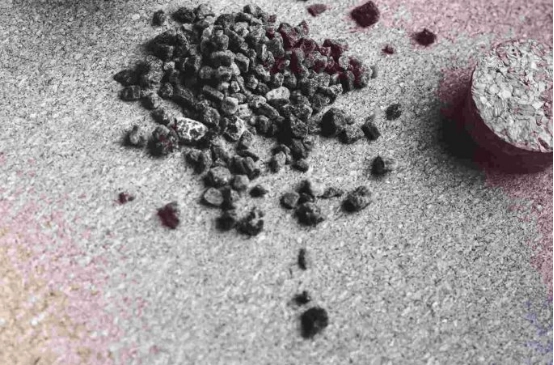
A laboratory sample can be excellent and still fail to represent routine production. Confirm whether the sample came from a normal batch, a hand selected lot, or a specially prepared trial.
Keep part of the approved sample sealed and compare it with the first commercial shipment. Moisture, dispersion, sieve residue, and process behavior often reveal more than a brochure.
At one refractory plant, the approved sample performed well in a small furnace trial. The bulk shipment met the carbon target but contained more fines. Mixing time increased, dusting became worse, and the formulation needed adjustment. The problem was not carbon. It was distribution.
Can the Supplier Meet Your Volume and Delivery Requirements?
A technically acceptable product is still a poor choice if it arrives unpredictably. Capacity should be judged against the buyer’s actual order pattern, including seasonal peaks and repeat orders.
Ask about monthly output, minimum order quantity, standard lead time, packaging formats, port arrangements, and stock policy. A supplier may report large annual capacity yet struggle to prepare a specific mesh grade quickly.
Control over the supply chain also matters. An integrated mine to processing supplier can often trace problems more directly than a trader sourcing mixed material. PERMANENT MINERALS, for example, works with natural graphite mining and processing in Tanzania. A buyer evaluating its material should focus on how ore selection, beneficiation, drying, and screening are controlled from batch to batch—not simply on access to a mine.
Ask what happens when ore characteristics change, a screen is replaced, or shipping is delayed. Specific answers carry more weight than confident promises.
What Documents Should a Reliable Graphite Supplier Provide?
International purchases create paperwork early. Missing documents can delay customs clearance, internal approval, or warehouse release.
A normal package may include:
- Product specification sheet
- Batch specific COA
- Safety Data Sheet
- Country of origin documents
- Packing details
- Commercial invoice and packing list
- Export or inspection records when required
Review the product name and grade across every document. “Natural flake graphite powder, 95% carbon, 200 mesh” should not become “industrial graphite” elsewhere without explanation.
The SDS should also match the supplied product and destination requirements. An outdated generic document may create questions at the port or customer warehouse.
How Should Buyers Compare Graphite Supplier Quotes?
Price per ton is visible. The costs around it are less obvious.
| Quote Factor | What Buyers Should Compare |
| Product specification | Carbon, ash, moisture, impurities, particle size |
| Pricing basis | Currency, unit weight, validity period |
| Incoterms | EXW, FOB, CIF, or another term |
| Packaging | Bag type, net weight, pallets, moisture protection |
| Testing | COA, third party inspection, retained samples |
| Lead time | Production, inland transport, vessel schedule |
| Payment terms | Deposit, balance timing, credit conditions |
A cheaper offer may include weaker packaging, wider particle tolerance, or no inspection. Another may look expensive but reduce screening losses and production adjustments.
When comparing natural graphite sources, check whether the grade, packaging, testing, and shipping basis are genuinely equivalent. Many price comparisons fail at that point.
What Questions Should Buyers Ask Before Placing an Order?
The discussion should end with evidence, not reassurance. A short technical call can expose gaps quickly.
- Can the required carbon and particle size range be guaranteed?
- Is a batch specific COA issued with every shipment?
- Is the sample representative of routine production?
- How is batch consistency monitored?
- What are the MOQ and normal lead time?
- Which packaging and Incoterms are available?
- How are quality claims handled?
- Can supply increase if demand grows?
Listen for numbers, methods, and documents. “No problem” is not a technical answer.
A useful supplier may say that a requested specification is difficult, expensive, or unnecessary. That can be a positive sign. Tighter purity, sizing, or delivery requirements usually add cost somewhere.
Conclusion — Choose Based on Evidence, Not Claims
A reliable natural graphite supplier should make the material easier to understand. The buyer should be able to connect the specification to the process, verify each shipment, and see how deviations will be handled.
Before committing to volume, request a current specification sheet, recent COA, and representative sample. Buyers evaluating natural graphite for industrial applications can request a specification sheet, recent COA or representative sample from PERMANENT MINERALS to compare the available grade with their technical requirements.
FAQ
Q: What is the most important specification when buying natural graphite?
There is no universal answer. Fixed carbon matters, but particle distribution, ash, moisture, and application specific impurities may have equal impact.
Q: Should buyers always choose the highest carbon graphite grade?
No. Higher carbon usually costs more and may not improve the finished product. The grade should meet the process requirement without adding unnecessary cost.
Q: Is a standard sample enough for supplier approval?
It is enough for initial screening, not final approval. Confirm that it represents normal production and compare it with a trial or first commercial shipment.
Q: What information should be included in a graphite RFQ?
State the application, carbon target, ash and moisture limits, mesh or particle size, order volume, packaging, destination port, and requested Incoterm. Clear RFQ data produces more comparable quotations.