
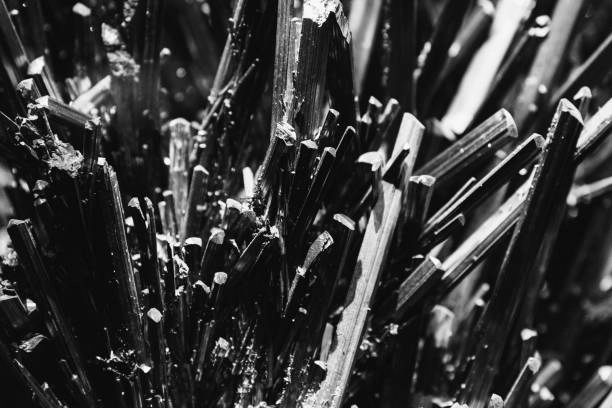
-325 mesh graphite powder is commonly specified when an industrial process needs fine particles, reasonably uniform dispersion, and controlled carbon content. It appears in refractory formulations, foundry materials, lubricants, conductive coatings, and other carbon-based mixtures.
The mesh number is useful, but it is only part of the specification. Two graphite powders sold as “-325 mesh” may behave differently once they enter a mixer, coating line, or refractory batch. Fixed carbon, ash, moisture, particle size distribution, and consistency between shipments all matter.
For buyers, the practical question is not whether -325 mesh graphite is fine enough. It is whether a particular grade is fine enough—and clean enough—for the process where it will actually be used.
What Does “-325 Mesh” Mean in Graphite Powder?
Mesh size is still widely used in graphite trading because it gives buyers and suppliers a quick way to describe particle size. The number, however, should not be treated as a complete particle-size specification.
Understanding Mesh Size
A 325-mesh screen has approximately 325 openings per linear inch, corresponding to a nominal sieve opening of about 44 microns.
As the mesh number increases, the sieve opening becomes smaller. A 325 mesh graphite powder is therefore finer than a 200 mesh or 100 mesh material under comparable screening conditions. Buyers comparing graphite powder from 80 mesh to 325 mesh should look beyond the nominal sieve number.
Fine particles tend to distribute more easily through coatings, binders, grease systems, and finely blended dry formulations. That can be useful. It can also make powder handling more demanding, especially where dust control and feeding consistency are important.
Why the Minus Sign Matters
The “-” in -325 mesh generally means the material passes through a 325-mesh sieve.
That distinction matters during purchasing. A specification saying only “325 mesh” may be interpreted differently by different suppliers. A buyer should know what percentage actually passes the screen.
For tighter process control, ask for particle size distribution rather than relying on the mesh designation alone. In some applications, D50 or D90 data says more about how the powder will behave than the words “-325 mesh” on a quotation.
Key Properties of -325 Mesh Graphite Powder
Fine particle size changes how graphite mixes, coats surfaces, fills spaces, and interacts with other raw materials. Carbon grade and impurities then determine whether those advantages are useful in the finished formulation.
Fine Particle Size
One practical advantage of -325 mesh graphite powder is its relatively high surface area compared with coarser graphite.
This can improve dispersion in certain formulations and produce a more uniform carbon distribution. In a foundry coating, for example, large particles or an excessively broad size distribution may leave a noticeably less uniform surface. In a lubricant formulation, poor dispersion can cause settling or inconsistent application.
Fine material is not automatically better. Some processes need coarser flakes for structure, oxidation resistance, or other performance requirements.
Fixed Carbon Content
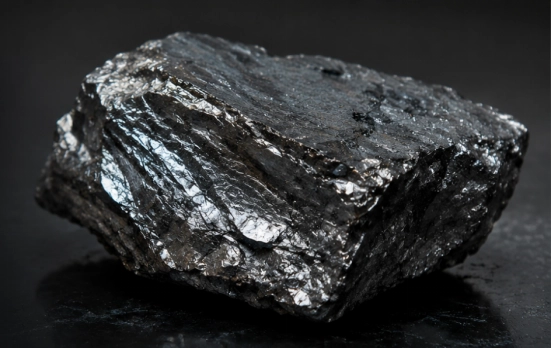
Fixed carbon is one of the main purchasing parameters for industrial graphite.
Natural graphite can be supplied in medium-carbon and high-carbon grades depending on processing and application requirements. Grades in the 94% to 99% fixed-carbon range are commonly considered for a variety of industrial uses, although the correct level depends on the formulation.
Using a higher-carbon grade than the process requires may simply increase raw-material cost. Using a grade with insufficient carbon can create a much more expensive production problem.
Ash and Moisture
Ash represents the non-carbon mineral residue remaining in graphite. Moisture affects handling, storage, weighing, and sometimes processing stability.
These numbers deserve attention on the COA.
A fine graphite powder with the correct mesh size but unstable ash content can still cause problems in a controlled industrial formulation. The same applies to excessive or inconsistent moisture.
Mesh size alone does not determine graphite quality.
Common Applications of -325 Mesh Graphite Powder
-325 mesh material is used across several industrial graphite applications, particularly where fine and controlled particle distribution is useful.
Refractory Materials
Fine graphite powder can be used in refractory mixes, bricks, crucible-related materials, and other carbon-containing refractory systems.
Its fine particle size helps distribute graphite through the formulation. That becomes important when graphite must be mixed with several mineral powders and binders without creating obvious carbon-rich or carbon-poor areas.
Refractory buyers should still evaluate fixed carbon, ash chemistry, oxidation behavior, and particle-size distribution rather than selecting by mesh alone.
Foundry and Metallurgical Applications
Graphite powder is used in various foundry and metallurgical formulations, including coatings, carbon-containing mixtures, and process materials.
A -325 mesh grade can be useful when a smooth, finely distributed graphite phase is required. In practice, buyers often pay close attention to consistency here. A powder that works well during one production run but arrives with a noticeably different particle distribution in the next shipment creates unnecessary adjustment on the shop floor.
Industrial Lubricants
Graphite has a layered crystal structure that makes it useful in dry lubricants, grease formulations, and certain high-temperature lubrication systems.
Fine graphite powder can disperse through a lubricant formulation more uniformly than coarse material. The optimum particle size depends on the carrier system, application method, operating temperature, and equipment involved.
Very fine powder can also be more difficult to handle. That trade-off should be considered before automatically selecting the finest available grade.
Conductive Materials and Coatings
Natural graphite powder may also be used in conductive coatings and carbon-based formulations where electrical conductivity is required.
Fine particles can help create a more continuous graphite distribution in the finished layer. Conductivity, though, is not controlled by particle size alone. Graphite structure, fixed carbon, impurities, binder selection, loading level, and coating thickness can all change the result.
A trial batch is usually more useful than selecting a grade from mesh size alone.
How to Select the Right -325 Mesh Graphite Powder
A useful purchasing specification should describe what the process actually needs. “-325 mesh graphite” is a starting point, not a complete RFQ.
1. Define the Required Fixed Carbon
Determine whether the application requires a medium-carbon grade, a 94–95% product, a 97–98% grade, or another specification.
Higher fixed carbon is not always necessary. Match the carbon level to the technical requirement and acceptable impurity range.
2. Check Particle Size Distribution
Ask what percentage passes 325 mesh.
Where particle size is critical, request a PSD report and review D50 or D90 values when available. Two products can both meet a nominal -325 mesh specification while having quite different distributions below 44 microns.
3. Review Ash and Moisture Specifications
Check typical and maximum ash and moisture values.
More important, look at whether those values remain stable between batches. Industrial production usually tolerates a known specification better than a material that moves unpredictably inside a wide range.
4. Match the Grade to the Application
Tell the supplier where the graphite will be used.
A refractory producer, lubricant manufacturer, foundry, and conductive-coating company may all purchase -325 mesh graphite, yet their preferred carbon content and impurity limits can be very different.
5. Request a COA or Sample
Before a bulk order, review a recent Certificate of Analysis and request a sample where qualification testing is required.
The sample should be evaluated in the actual process if possible. Laboratory numbers are useful, but a mixer, coating line, furnace, or lubricant system often reveals behavior that a specification sheet does not.
-325 Mesh vs Coarser Graphite Powder
-325 mesh graphite offers finer particles and generally greater surface area than 100 or 200 mesh grades. It can be a good fit for coatings, fine formulations, lubricants, and applications requiring uniform graphite distribution.
Coarser graphite remains preferable in many processes.
A refractory formulation, for example, may intentionally use several particle-size fractions rather than one very fine grade. The combination helps achieve the required packing, processing behavior, and final properties. Finer is not always better. The correct particle size depends on the manufacturing process and the job the graphite is expected to do.
Sourcing -325 Mesh Natural Graphite Powder from PERMANENT MINERALS
PERMANENT MINERALS supplies natural graphite materials from Tanzania for industrial customers with specific carbon-content and particle-size requirements.
For -325 mesh natural graphite powder, buyers can discuss target fixed carbon, particle-size requirements, application, packaging, sample requirements, and shipment specifications before moving to a bulk order. Providing the intended application usually makes grade selection more efficient. A short technical specification is even better.
Looking for -325 mesh graphite powder for your application?
Contact PERMANENT MINERALS to request specifications, a recent COA, sample availability or a quotation.
Frequently Asked Questions
Q: What particle size is -325 mesh graphite powder?
-325 mesh generally refers to graphite powder passing through a 325-mesh sieve, which has a nominal opening of approximately 44 microns.
Q: Is -325 mesh graphite powder suitable for refractory materials?
Yes, it can be used in many refractory formulations where fine graphite distribution is required.
Q: Is 325 mesh graphite finer than 200 mesh graphite?
Yes. A 325-mesh screen has a smaller opening than a 200-mesh screen, so material passing 325 mesh is generally finer.
Q: What should I check before buying -325 mesh graphite powder?
Check fixed carbon, particle size distribution, ash, moisture, batch consistency, packaging, and the supplier’s recent COA.