
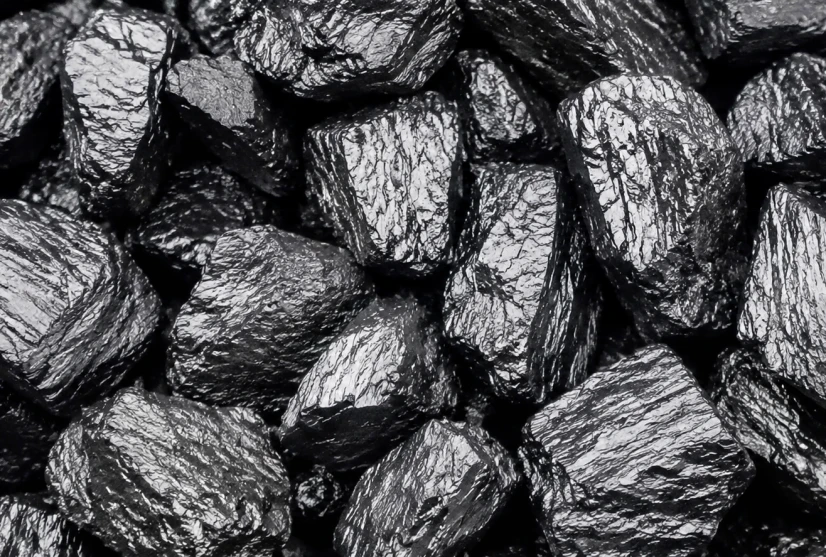
Graphite powders with the same fixed carbon content can behave very differently in a mixer, coating line, or foundry blend. Particle size changes coverage, flow, packing, binder demand, and dust levels.
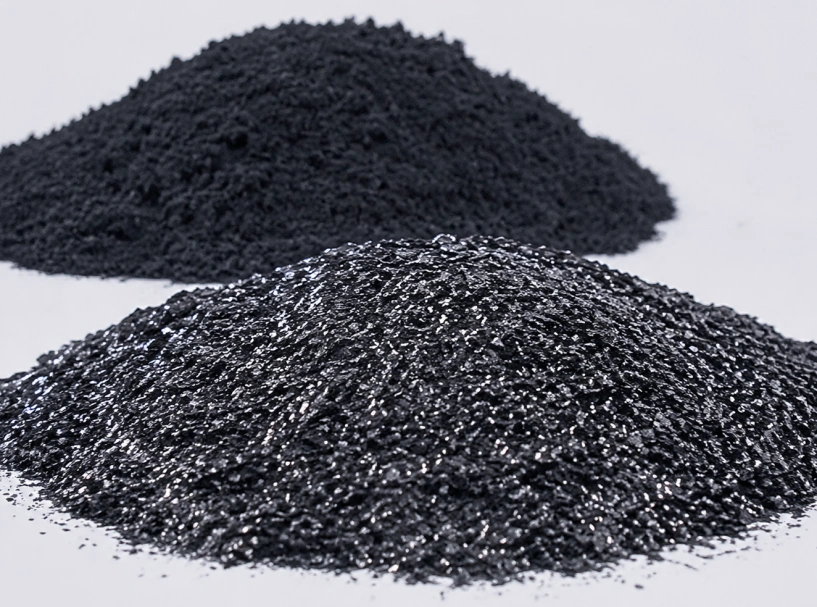
The finest grade is not automatically the best. A 325 mesh powder may produce a smoother film, while an 80 mesh product retains larger flakes for a refractory or metallurgical mix. The useful question is not “How fine can the powder be?” It is “What size will run reliably?”
What Do 80 Mesh and 325 Mesh Mean in Graphite Powder?
Mesh describes a sieve, not a guaranteed particle diameter. As the mesh number rises, the opening becomes smaller. Under common U.S. sieve references, 80 mesh corresponds to about 177 microns, while 325 mesh is about 44 microns. Check exact values against the stated standard.
The plus or minus sign matters. “+80 mesh” means material retained on the 80 mesh sieve; “−80 mesh” means material passing through it. A purchase order that says only “80 mesh graphite” leaves room for an expensive misunderstanding.
A sound specification states the sieve standard, passing or retained requirement, and allowable screen residue. Tight processes also need a complete particle size distribution.
How Do 80, 100, 150, 200, and 325 Mesh Graphite Powders Compare?
The table is a starting point, not a substitute for a formulation trial. Binder, dosage, mixing energy, and performance targets still govern the choice.
| Mesh grade | Approximate sieve opening* | Relative size | Typical behavior | Potential uses |
| 80 mesh | 177 μm | Coarse | Retains larger flakes; relatively low surface area | Refractories, foundry mixes, metallurgical additives |
| 100 mesh | 149 μm | Moderately coarse | Good flow with useful flake structure | Casting materials, refractories, industrial lubricants |
| 150 mesh | 100 μm | Medium | Balanced coverage, mixing, and handling | Lubricants, seals, general industrial compounds |
| 200 mesh | 74 μm | Fine | More uniform distribution and surface coverage | Coatings, friction materials, fine lubricant blends |
| 325 mesh | 44 μm | Very fine | Smooth films and high surface area; more dispersion effort | Conductive coatings, fine fillers, precision lubrication |
*Nominal openings; values can vary slightly with the sieve standard.
Which Graphite Mesh Size Best Fits Your Application?
Application requirements narrow the range quickly. Surface finish points toward finer material. Flake retention, simple feeding, and lower binder demand often point the other way. In production, the best grade is usually the one that meets the functional target without making the process temperamental.
When Should You Choose 80–100 Mesh Graphite?
Coarser grades suit refractory, foundry, and metallurgical formulations where larger flakes contribute structure and a smooth finish is unnecessary. Lower surface area can reduce binder demand and simplify dry feeding.
A foundry facing mix shows the trade off. Finer graphite may improve coverage, yet the blend can demand more liquid binder and form soft lumps. Nothing is gained if operators must slow the mixer.
When Is 150–200 Mesh the Better Balance?
This range is the practical middle ground. It distributes more evenly than coarse graphite but remains easier to wet and handle than 325 mesh. Lubricants, seals, friction products, and general industrial blends commonly begin trials here.
For an existing production line with ordinary powder feeding and moderate mixing energy, 150 or 200 mesh is a reasonable engineering choice. Not glamorous. Usually workable.
When Should You Select 325 Mesh Graphite Powder?
Choose 325 mesh when a smooth, well distributed graphite phase matters: conductive coatings, fine fillers, or low texture lubricant films. Higher surface area improves coverage but may raise binder demand. Agglomerates become easier to create and harder to remove.
One coating can look uniform in the pail yet show streaks after application because dry pockets survived low shear mixing. In that case, buying finer graphite was only half the job. The dispersion method needed attention as well.
Is Mesh Size the Only Specification Buyers Should Check?
No. Mesh size without chemistry and distribution data is incomplete. Fixed carbon affects purity and cost, while ash chemistry can matter more than total ash in sensitive metallurgical or electrical uses. Set limits for impurities that can disrupt the process.
Buyers should also review:
- full particlesize distribution and screen residue;
- flake morphology and bulk density;
- moisture, volatiles, ash, and relevant trace impurities;
- test methods and batchto batch consistency.
Particle size and carbon grade should be selected together. PERMANENT MINERALS supplies medium carbon graphite and high carbon graphite, so an 80–325 mesh requirement can be discussed alongside the actual purity target rather than as a separate decision.
How Can You Validate a Graphite Grade Before Placing a Bulk Order?
Start with the process limit: conductivity, friction, texture, flow, temperature, or contamination. Shortlist two or three grades rather than fixing one nominal mesh too early.
Request the data sheet, a recent certificate of analysis, the sieve method, and representative samples. Test the actual binder and equipment. A laboratory stirrer does not predict how a 500 kilogram mixer will disperse 325 mesh powder.
Record feeding, mixing time, dust, dispersion, product performance, and reject rate. Total formulation cost matters more than price per tonne. A finer grade adding fifteen minutes to every batch may be the expensive option.
Which Graphite Powder Grade Should You Choose?
Use 80–100 mesh where larger flakes and straightforward handling carry more value than a fine finish. Look at 150–200 mesh when the process needs balanced coverage, mixing, and cost. Reserve 325 mesh for applications that genuinely benefit from fine dispersion and smooth films—and have enough mixing capability to achieve them.
For a grade recommendation, send PERMANENT MINERALS the target application, fixed carbon range, mesh notation, test standard, and expected order quantity. A certificate of analysis and production scale sample should settle the remaining questions.
FAQ
Q: Is 325 mesh graphite finer than 80 mesh graphite?
Yes. A 325 mesh sieve has a nominal opening of about 44 microns, compared with about 177 microns for 80 mesh under common U.S. sieve references.
Q: Does 325 mesh graphite always provide better conductivity?
No. Finer powder can improve distribution and contact in some formulations, but conductivity also depends on carbon purity, flake structure, loading, orientation, binder, and dispersion quality.
Q: Can 80 mesh and 325 mesh graphite be blended?
Yes. A controlled blend can improve packing or balance structure with surface coverage. The final distribution must be specified and tested; simply mixing two grades does not guarantee consistency.
Q: What information should appear on a graphite powder purchase order?
Include the graphite type, fixed carbon minimum, mesh or micron requirement, plus/minus designation, screen residue, moisture and ash limits, test standard, packaging, and required inspection documents.