
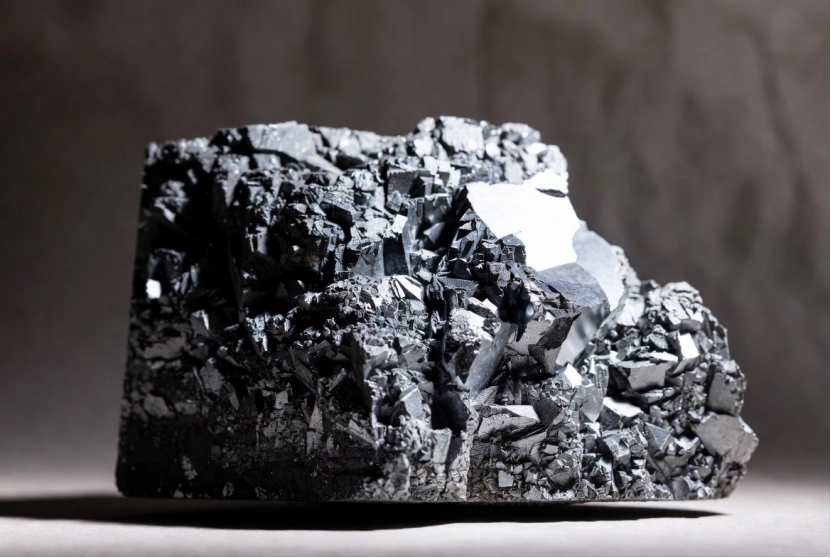
Mesh size is certainly not a minor detail when purchasing graphite powder. It determines how the material moves, blends, coats, and fills. Furthermore, it dictates how the product operates within an actual manufacturing setup.
A buyer can order the right fixed carbon content and still get the wrong material. The powder may dust badly, bridge in a feeder, clump in storage, or give a rough surface after coating. The graphite is not always poor quality. The mesh size may simply be wrong for the job.
What Does Mesh Size Mean in Graphite Powder?
Mesh size describes how fine or coarse graphite powder is after grinding and screening. A higher mesh number means a finer powder because the screen openings are smaller.
80 mesh graphite powder is relatively coarse. 200 mesh is finer. -325 mesh is finer again and usually means the powder can pass through a 325 mesh screen.
Mesh size is not a purity grade. It does not show fixed carbon, ash, moisture, sulfur, or volatile matter. It only describes particle size in a practical buying language. Two powders may both have 94% fixed carbon, but an 80 mesh powder and a -325 mesh powder will behave very differently.
How Is Mesh Size Different from Micron Size?
Mesh is a sieve reference. Micron size is closer to an actual particle diameter measurement. Buyers often see both, especially for fine graphite powder.
| Term | Meaning | Buyer’s Use |
| Mesh size | Sieve opening reference | Purchase orders |
| Micron size | Particle diameter reference | Fine powder control |
| Particle size distribution | Range of particle sizes | Batch consistency |
A product marked 200 mesh can still vary between suppliers. It may meet a mesh description but behave differently in mixing, coating, or feeding.
Why Does Mesh Size Matter for Graphite Powder Performance?
Graphite powder does not function effectively merely because of its basic composition. Factors like particle dimensions, flake form, purity, and dampness all influence the final outcome.
Fine graphite can boost surface coating, spreading, and contact space. Therefore, it functions effectively in paints, sealing mixtures, and electrically conductive goods.
However, the negative aspects are equally significant. Fine material can produce dust, draw in dampness, clump together, and move poorly through certain dispensing machines. Workers typically observe these issues very fast.
Coarser graphite maintains significant worth. Heat-resistant, casting, and metal-working sectors frequently require thermal stability, a distinct flake structure, and consistent dimensions. These factors are often more critical than extreme fineness.
Which Graphite Powder Mesh Size Should Buyers Choose?
There is no single ideal mesh size. The correct selection relies on the intended use, machinery, binding agent, heat levels, and the ultimate product demands.
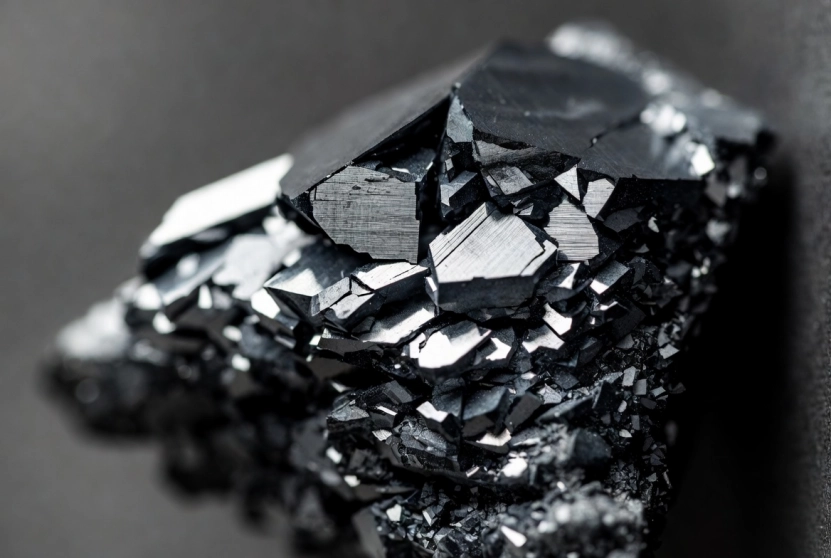
| Mesh Size | General Type | Common Use | Main Concern |
| 80 mesh | Coarser powder | Refractories, casting, metallurgy | Structure and heat resistance |
| 100–150 mesh | Medium-coarse powder | Foundry, lubricants, additives | Flow and performance balance |
| 200 mesh | Medium-fine powder | Sealing, friction materials, coatings | Dispersion and finish |
| -325 mesh | Fine powder | Conductive materials, fine coatings | Dust, moisture, consistency |
These are working references, not rigid rules. A refractory producer may use several particle sizes in one formula. A coating producer may care more about dispersion after mixing than the mesh number alone.
Is Finer Graphite Powder Always Better?
No. Finer graphite powder is useful, but it is not automatically better.
Fine graphite may offer:
- Better surface coverage
- Smoother coating appearance
- Improved dispersion
- More contact area in conductive systems
- Better filling in sealing compounds
It may also cause:
- More dust
- Higher agglomeration risk
- Poorer flow in some feeders
- Greater moisture sensitivity
- Higher processing cost
Natural flake graphite has structure. Grinding it too fine can reduce part of that value. A finer powder can look better on paper and perform worse in the plant.
What Other Specifications Should Buyers Check Besides Mesh Size?
Mesh size should be checked with the rest of the technical sheet.
Important items include:
- Fixed carbon:Carbon purity level.
- Ash:Residue and high-temperature performance.
- Moisture:Storage, flow, and mixing behavior.
- Particle size distribution:Sizing consistency.
- Flake structure:Thermal and conductive behavior.
- Packaging:Moisture and contamination protection.
- Documents:COA, TDS, MSDS, or inspection reports.
Unstable sizing can cost more than a higher unit price. The cost appears later as blocked equipment, rejected batches, or extra formulation work.
How Should Buyers Communicate Mesh Size Requirements to a Supplier?
“Please quote graphite powder” is too vague for serious purchasing.
A useful inquiry should include:
- Required mesh size or particle size range
- Target fixed carbon content
- Application industry
- Monthly or annual quantity
- Packaging requirement
- Destination port or country
- Sample request
- Required documents
A sealing material buyer asking for 200 mesh graphite powder is not asking for the same thing as a refractory buyer asking for 80 mesh natural flake graphite.
Where Can Buyers Source Natural Graphite Powder in Different Mesh Sizes?
Purchasers should seek a supplier who comprehends both mineral refinement and commercial application. The cost is important. However, uniform dimensions, dampness management, packing, consistent delivery, and trial assistance frequently hold greater significance over an extended period.
PERMANENT MINERALS provides natural graphite powder originating from Tanzania across varied mesh sizes. This includes options ranging from 80 mesh down to -325 mesh. These specific types can aid heat-resistant items, sealing parts, metal-working, oils, electrical goods, and various other commercial functions.
The useful sourcing question is not only “What is the price per ton?” It is “Which grade will run reliably in this process?”
Conclusion: Choosing the Right Graphite Mesh Size Starts with the Application
Mesh size significantly influences how graphite powder operates during manufacturing. A larger mesh value typically points to a finer material. However, finer material does not automatically represent the optimal selection.
Purchasers must pick graphite powder based on the working environment rather than relying solely on product codes. They need to evaluate fixed carbon, ash, dampness, dimensional spread, flake form, and batch uniformity collectively.
Contact PERMANENT MINERALS to discuss the specific graphite particle size best suited for your production needs.
FAQ
Q: What is the difference between 80 mesh and 325 mesh graphite powder?
80 mesh graphite powder is coarser. 325 mesh graphite powder is much finer. Coarser grades fit heat-resistant uses. Finer grades fit coatings and sealing materials.
Q: What does -325 mesh mean?
-325 mesh usually means the graphite powder can pass through a 325 mesh screen. It does not mean every particle is the same size.
Q: Which mesh size is best for refractory materials?
Many refractory applications use coarser or medium graphite powders because flake structure and thermal stability matter.
Q: Which mesh size is better for coatings or conductive materials?
Manufacturers frequently employ fine graphite powders like 200 mesh or -325 mesh. These specific sizes can actively enhance spreading and surface coating.
Q: Should buyers request samples before bulk orders?
Yes. A sample confirms whether mesh size, purity, flowability, and real application performance match production needs.