
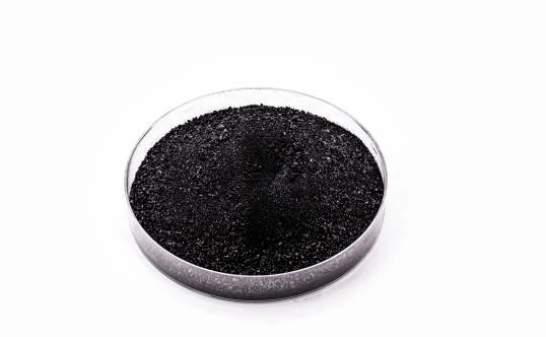
Buying graphite powder in bulk is not simply asking for a price per ton. The grade has to match the process, the shipment must arrive in usable condition, and the supplier must repeat the specification across lots. A request for quotation (RFQ) lets both sides evaluate fit before commercial terms are negotiated.
1. Define the application before requesting a quote
Start with the job the graphite must perform. Graphite can provide electrical and thermal conductivity, lubricity, chemical stability, oxidation resistance, or high-temperature performance, but the priority changes by application.
For a metallurgical additive, fixed carbon and dispersion may be central. A refractory producer may care more about carbon level, particle size, moisture, and finished-mix behavior. A lubricant or sealing manufacturer may need a particular mesh range and consistent handling. Battery-related inquiries require careful alignment; general industrial powder should not be presented as an anode material without specific qualification.
Describe the process, target product, operating temperature, mixing method, and current grade in the RFQ. Include why the supplier is being changed so the producer can recommend a realistic grade.
Before sending an inquiry, buyers should match the intended grade with the specific application.
2. Put the specification in measurable terms
“High-purity graphite” is not a complete specification. State the measurable limits and the test basis requested for each shipment. At minimum, an RFQ should identify:
- fixed carbon, with the minimum percentage;
- volatile matter, with the maximum percentage;
- moisture, with the maximum percentage;
- particle size or mesh designation;
- screen residue or another agreed size-control measure;
- acceptable lot-to-lot variation; and
- the required sample and inspection documents.
PERMANENT MINERALS classifies high-carbon graphite as 94–99% fixed carbon and medium-carbon graphite as 80–93%.
If the application needs a specific screen residue, do not leave it implied by the mesh number. The high-carbon product table, for example, lists a screen-residue value of at least 75% for several 500-mesh entries and a maximum 20% value for some negative-mesh entries. Ask the supplier to confirm exactly how the reported value is measured and which sieve method is used.
For comparison, request a data sheet and sample against the same specification. A lower carbon content may suit one process and fail another; compare commercially only after the technical boundary is fixed.
3. Separate product grade from processing capability
Bulk graphite powder procurement involves more than the mine output. Ask how raw ore becomes the powder in the quotation. The process affects consistency, moisture control, and the supplier’s ability to adjust a grade when the application changes.
PERMANENT MINERALS describes an integrated route covering graphite mining, ore crushing, flotation purification, mechanical dewatering, high-temperature drying, and precision screening. For a buyer, the important RFQ questions are practical:
- Which stages are used for the quoted grade?
- Where are sampling and quality checks performed?
- Can mesh, carbon range, or moisture limits be adjusted?
- What is the normal lead time for a repeat order?
- Will the process route remain consistent for future lots?
The high-carbon graphite specification provide the starting product data. The RFQ should turn those reference ranges into the limits that your plant can accept.
4. Ask for a repeatable quality package
A first sample can look acceptable while later lots create production problems. Build a document package into the buying process. Depending on the application and contract, it may include a technical data sheet, certificate of analysis for each lot, packing list, commercial invoice, and a retained sample reference.
The key is traceability. Ask the supplier to identify lot number, production date, net weight, moisture, fixed carbon, and particle-size results on the relevant documents. If an independent inspection is required, state when it occurs and who pays. Do not assume a general “quality certificate” covers every parameter the process needs.
It is also useful to define what happens when a lot is out of specification. An RFQ can request a replacement, credit, re-testing procedure, or written deviation approval. Agreeing on this before the purchase order reduces disputes after delivery.
5. Confirm packaging and transport conditions
Graphite powder is a bulk material, but it still needs a delivery plan. Ask the supplier to quote the packing format, unit weight, number of bags or containers, pallet arrangement if applicable, and protection against moisture or contamination. The correct package depends on handling equipment at the receiving site and on the number of days the product may be in transit.
Suppliers who offer professional container shipping services and can tailor logistics solutions to the customer’s region offer a significant advantage to international buyers. However, the RFQ should still specify the destination, preferred port or delivery point, Incoterm, documentation requirement, and any restrictions at the receiving facility. Request the estimated production time and shipping window separately; confusing those two dates is a common cause of planning errors.
For recurring supply, ask how partial shipments, transshipment, damaged packaging, and moisture claims are handled. A trial-container plan may need a different schedule when monthly demand increases.
6. Test supply continuity, not just one quotation
Price is only one part of landed cost. Compare grade, usable yield, packaging, inland transport, ocean freight, duties, inspection, storage, and the cost of an out-of-specification lot. A higher unit price may be stronger if it reduces emergency purchases or rework.
Capacity and inventory deserve direct questions. PERMANENT MINERALS reports multiple warehouses covering nearly 10,000 square meters and positions this inventory as support for timely supply during market fluctuations. Buyers should ask which products are normally stocked, how much can be allocated to a contract, and whether the quoted lead time applies to stock or fresh production.
7. Send an RFQ that a producer can answer clearly
Before sending the inquiry, assemble a one-page summary containing:
- application and process description;
- annual volume, trial quantity, and order frequency;
- required fixed-carbon range;
- mesh or particle-size distribution;
- moisture, volatile matter, and screen-residue limits;
- sample quantity and approval method;
- packing and delivery point;
- required documents and inspection terms; and
- target start date and replenishment schedule.
Attach your current specification or existing label if substitution is being considered. Ask the supplier to mark deviations instead of silently offering an alternative grade. This makes quotations easier to compare and protects planning.
Contact PERMANENT MINERALS and provide details regarding the application scenario, target specifications, demand volume, and destination to confirm the appropriate product grade, packaging method, and delivery plan.
FAQ
Q: What should be included in a bulk graphite powder RFQ?
A bulk graphite powder RFQ should include the application, fixed carbon content, particle size, moisture limit, order quantity, packaging requirements, delivery destination, and required quality documents.
Q: How do I choose the right graphite powder grade?
The right grade depends on the application, required carbon content, particle size, moisture level, and processing conditions. Buyers should provide detailed specifications before requesting a quotation.
Q: What is the difference between high-carbon and medium-carbon graphite?
PERMANENT MINERALS classifies high-carbon graphite as 94–99% fixed carbon and medium-carbon graphite as 80–93% fixed carbon.
Q: Why is particle size important when buying graphite powder?
Particle size affects dispersion, handling, processing performance, and finished-product consistency. Buyers should specify mesh size or particle-size distribution in the RFQ.
Q: What quality documents should graphite powder suppliers provide?
Common documents include a technical data sheet, certificate of analysis, packing list, commercial invoice, and lot-specific test results.