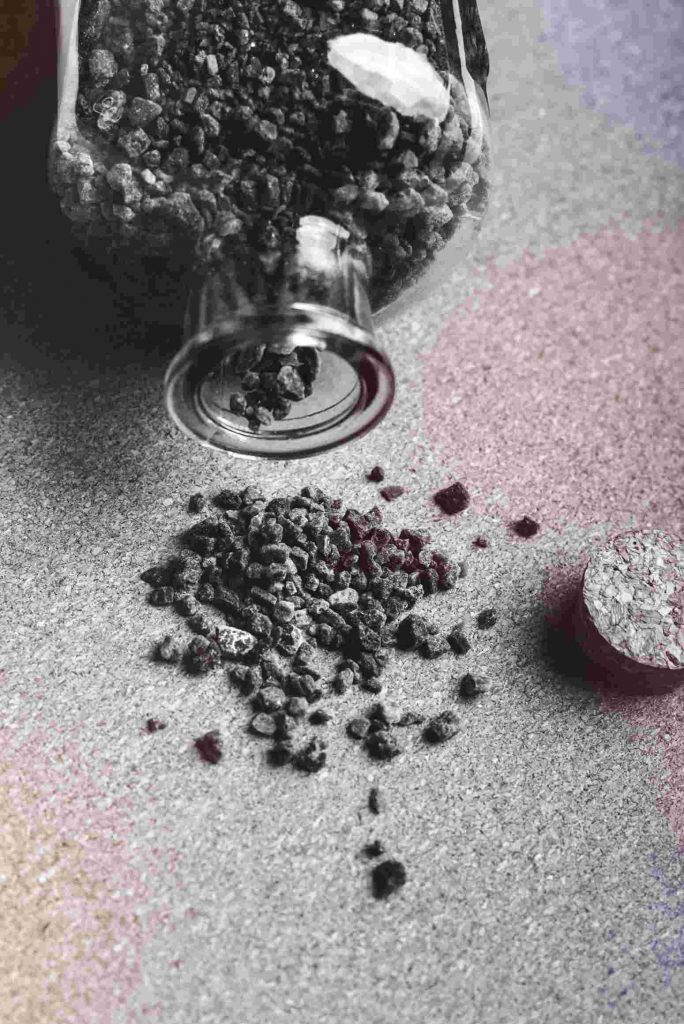
“Will this graphite survive our temperature?” is a reasonable question to send a supplier. My next question would be, “In air, or with oxygen largely excluded?” The distinction matters because hot graphite can react with oxygen and be consumed. For a buyer investigating graphite oxidation in refractories, the powder quotation leaves this question open. The answer has to come from the intended duty and a trial of the refractory recipe.
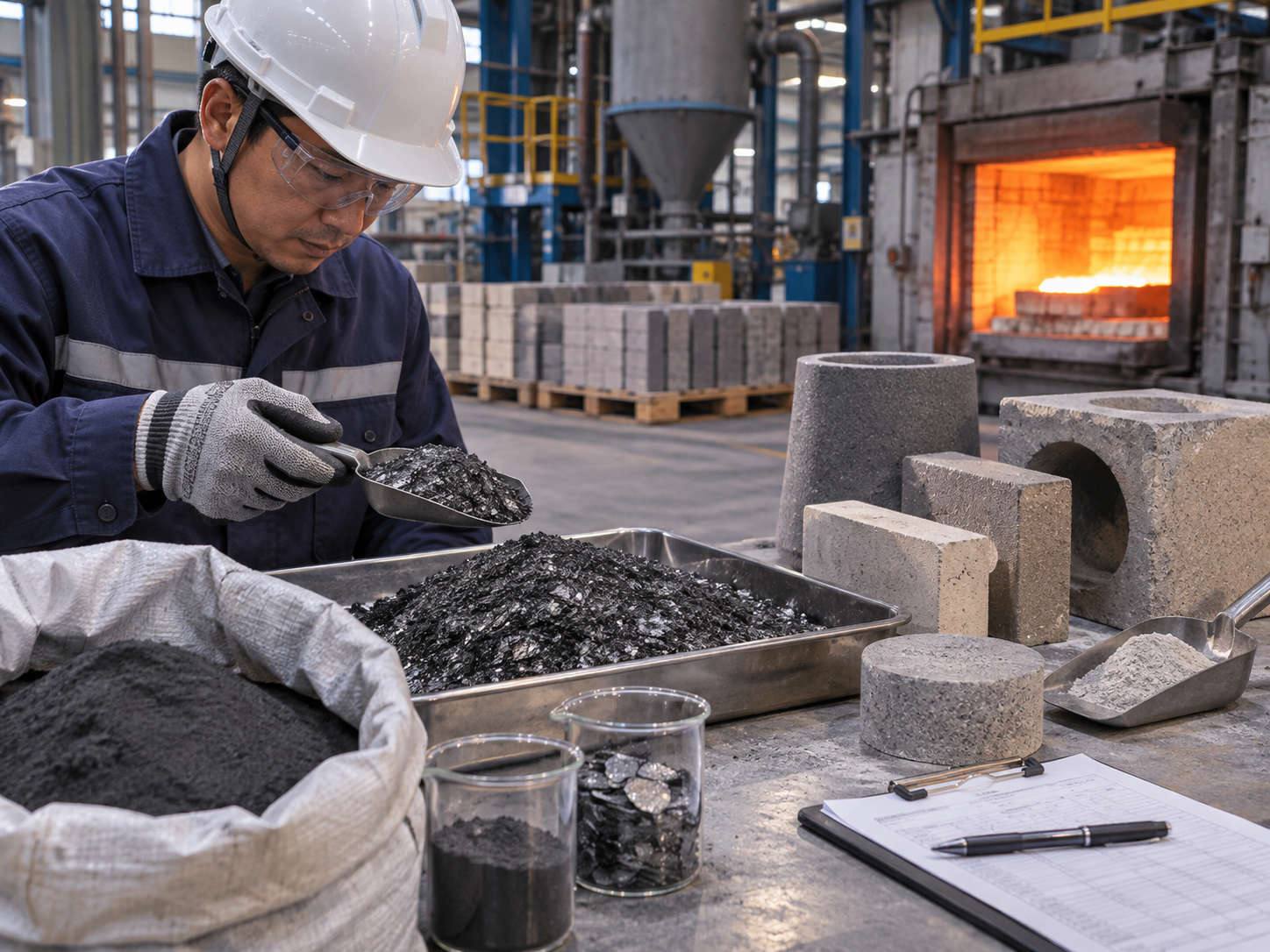
Describe the Exposure Before Choosing a Grade
For illustration, take two quotations that meet the same minimum fixed-carbon requirement. Call the powders A and B. B costs less, and the purchasing team wants to qualify it as an alternative. Nothing has been tested yet; this is a worked purchasing example, not a report of a customer trial.
Include the Heating and Cooling Stages
For A and B, I would want a sketch of the proposed duty beside the test request. Where is the component installed, and when can air reach it? The account should continue past the hot hold into cooling, and show whether the sequence repeats. A laboratory cannot reconstruct that sequence from the highest operating temperature alone.
Joints and cracks deserve attention in that description. Along with connected pores, they can provide access to graphite below the exposed face. Looking at the outside of a heated specimen won’t necessarily reveal the condition farther in. This is why a peak-temperature figure, even an accurate one, cannot describe the whole oxidation problem.
What Is the Supplier Offering?
On its high carbon graphite page, Permanent Minerals defines a product family spanning 94%–99% fixed carbon. The table separates grades and includes columns for moisture, volatile matter and screen residue. These are the details to bring into a quotation comparison rather than treating “high carbon” as a complete specification.
An inquiry might ask which listed grade matches the producer’s carbon and particle requirements. The answer should identify a grade, not just repeat the family range. Later, the incoming lot certificate can be checked against that agreement. Neither document, however, describes a finished lining’s life in service.
Give Powders A and B the Same Trial
The comparison becomes much less useful if A goes into the current recipe while B goes into a recipe with a different binder. We would have two changed ingredients to explain, with no way to separate their contributions from these two specimens. Since the purchasing example concerns replacement of A by B, there is a good reason to leave the binder alone for now.
From the Powder Lot to the Specimen Label
Behind the label B there should be an identifiable bag of graphite, with a lot number we can look up. The ingredient weights and preparation notes belong to that same trail. In our example, an unexpected change during mixing would be worth recording before the specimen reached the furnace. So would a departure from the planned curing or castable dry-out procedure. Otherwise, we could end up blaming B for a preparation difference.
Dispersion adds another question for a castable: how was the graphite distributed in the mix? For background, see the discussion of natural flake graphite in refractory castables, which also addresses curing and dry-out. A powder certificate doesn’t cover these later manufacturing steps.
Fill in the Thermal History
I’d have trouble evaluating a worksheet with only “B” and a final temperature on it. Did the sample spend a long time hot, or was the hold brief? Was air present? The heating and cooling details are missing too. For repeated exposures, we also need a cycle count. A and B need the same agreed treatment if this is to remain a comparison between their graphite grades.
Some duties will be difficult to reproduce in a small trial. A useful report might therefore describe its result narrowly, under the laboratory conditions used, leaving other service questions for further work. I’d rather see that limitation written beside the result than read a broad claim based on an unexplained furnace run.
Look Past the Colour of the Heated Face
The furnace run is finished, and A comes out looking darker. We haven’t assigned it any measured advantage in this example. There is still a section to examine and a set of agreed property checks to review before either quotation gets the preference.
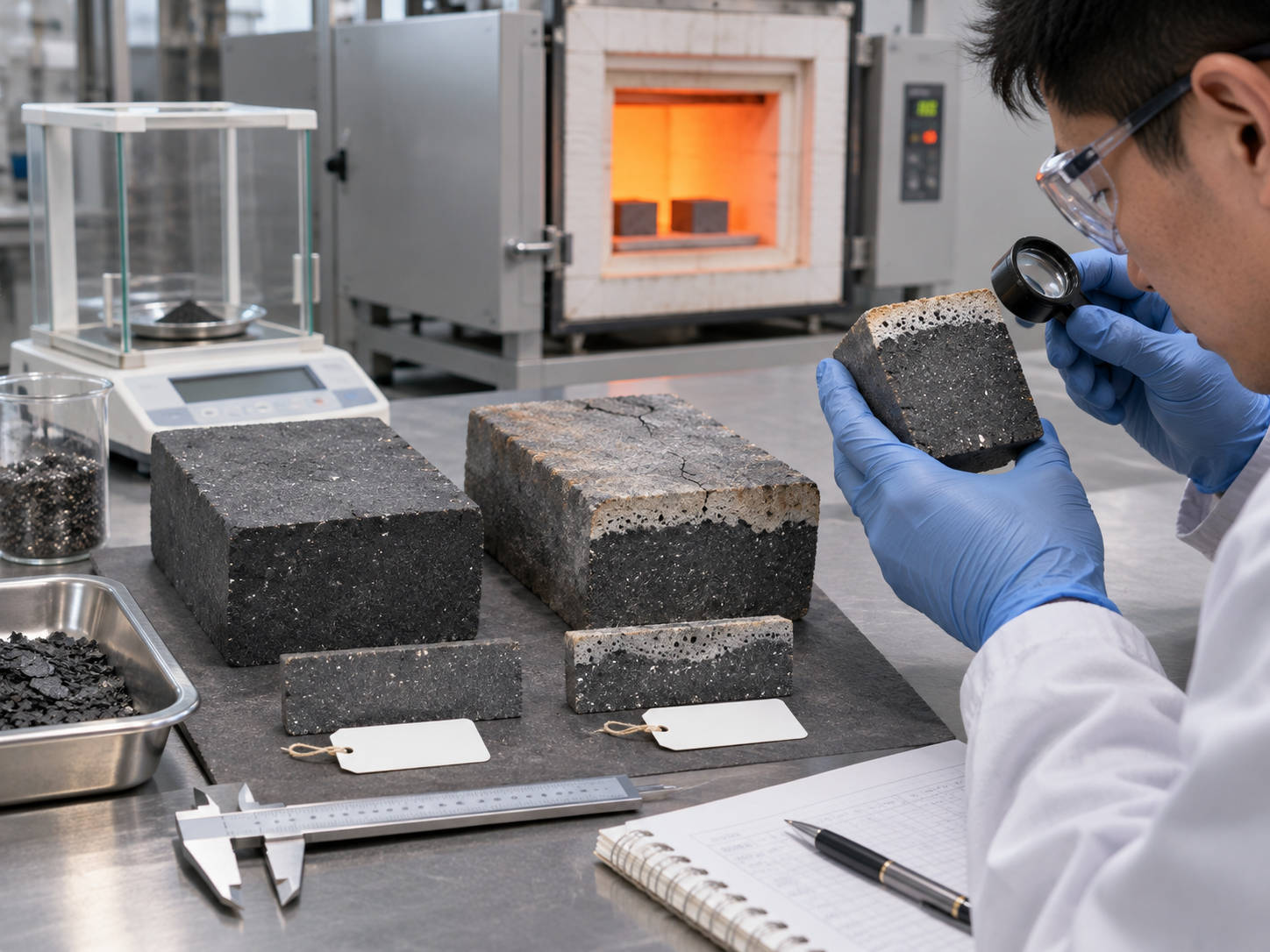
Oxidation can consume carbon that occupied space within the mix, leaving pores behind. Cutting the specimen lets the examiner look for the affected region below the face. Where the test procedure permits an unheated reference, I’d keep it for that comparison. A photograph taken before cutting is still worth retaining, although it leaves the interior unseen.
What about the mass or dimensions, the porosity and the required mechanical properties? These checks belong in the programme wherever the component specification calls for them. Steel and slag contact can require further testing. Permanent Minerals’ guide to graphite for steel ladle refractories discusses the connection between the graphite grade and the ladle application.
In our comparison, the acceptance limits need to be on paper before anyone chooses a winner. If both mixes pass, price can enter the decision. If only one passes, the price difference cannot explain away the other’s failure. These are trial decisions, not predictions of a particular campaign life.
If Both Fail, Revisit the Refractory
A failed result for A and B would not tell us that a still higher carbon percentage is the answer. The oxygen route remains a question. How open is the matrix? Are there cracks? What protection does the exposed surface have?
Antioxidants are another formulation choice, rather than a promise attached to the graphite bag. Their type and amount need evaluation in the complete mixture, including its processing behaviour. Development of a revised mix may be the next sensible step, but it would be a new stage of work, with its own preparation and exposure records.
Taking the Inquiry to Permanent Minerals
The published operations of Permanent Minerals Co., Ltd. include mining in Tanzania and processing through flotation, dewatering, drying and screening. For our purchasing example, I’d bring the discussion back to the grade table: which offered powder should go into the trial as B?
There is no need to arrive with a finished trial plan just to ask about a grade. Explain the application, share the available carbon and particle requirements, and request current data and sample availability. For pricing, add the quantity, packaging and destination. Before the powder enters the mix, resolve any difference between the grade quoted and the sample identification. Approval will still depend on the producer’s refractory trial.
Conclusion
The purchasing example starts with two apparently acceptable powders and ends with a comparison of two refractories. That is the essential shift. I’d keep the sample identity, recipe and furnace record together with the results, ready for the next lot comparison.
FAQs
Could another laboratory’s result save a trial?
That depends on how closely its procedure represents the proposed use. I’d ask for the preparation and exposure details before deciding what further work is needed.
Does approval of B apply to a different recipe?
That needs a fresh assessment. The example qualifies B in the tested mix, under the stated conditions.
Is a retained powder sample useful after approval?
Yes, where practical. Label it with the tested lot so that repeat work starts from an identified material.