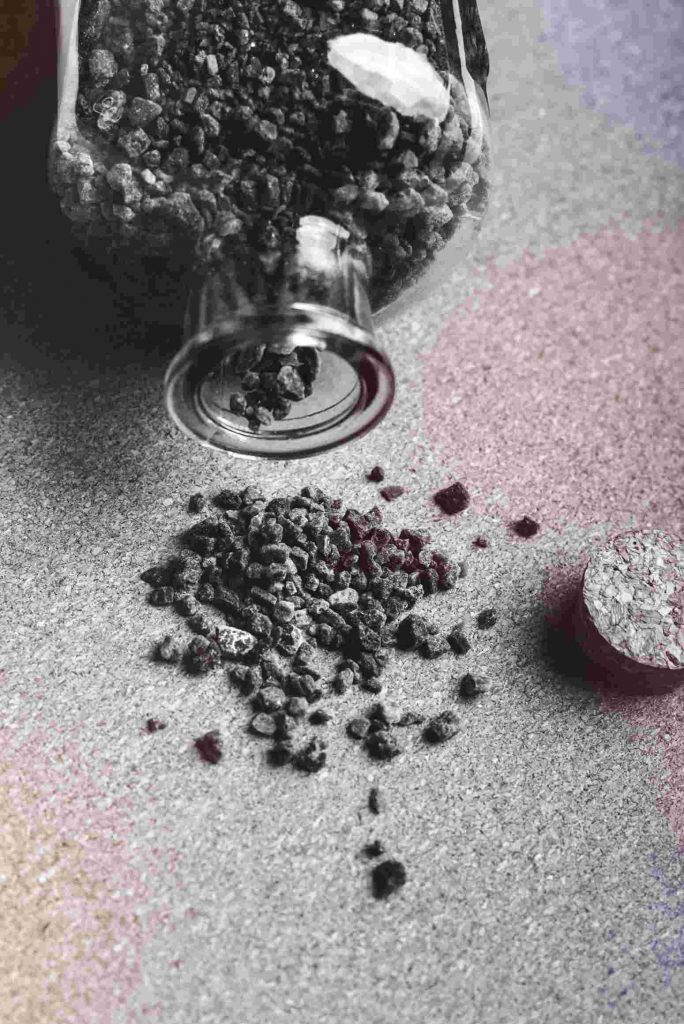
Natural graphite for sealing materials can help a compound control friction, tolerate heat, and resist chemical attack, but the right powder is defined by the seal duty rather than carbon content alone. A gasket, packing, molded ring, or process seal may face different temperature, pressure, media, compression, recovery, and manufacturing conditions. Describe those conditions, then match fixed carbon, ash, particle size, morphology, moisture, and binder compatibility to the finished seal.
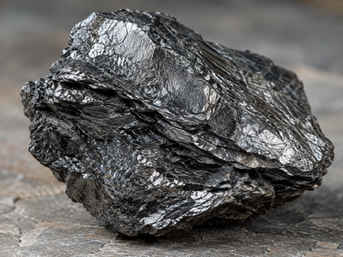
Why Natural Graphite Fits Sealing Materials
Graphite is considered in sealing materials because its layered structure can provide lubricity and support movement at an interface. Its thermal behavior can help manage heat, while low wettability with many reactive materials can reduce sticking or penetration. These benefits depend on the binder, reinforcement, substrate, and service media.
Define the job before selecting a grade. A static gasket may prioritize recovery and chemical compatibility; dynamic packing may need controlled friction and wear resistance. A high-temperature seal may be limited by oxidation of the complete compound. Industrial use cases on the graphite applications page show why the same mineral serves different roles; the formulation still has to fit the seal.
Which Graphite Properties Control Seal Performance?
The useful specification is the set of properties that changes leakage, friction, processing, or lot repeatability in the finished part.
|
Graphite property |
Why it matters in a sealing material |
Practical question |
|---|---|---|
|
Fixed carbon and ash |
Carbon describes the graphite fraction; ash can dilute the functional phase or add residues. |
What are the limits and test methods? |
|
Particle-size distribution |
Size affects packing, finish, mixing energy, and film continuity. |
Is this a full distribution or only a mesh pass rate? |
|
Flake morphology |
Flakes support sliding and barrier behavior, but large or fragile flakes can change molding and texture. |
Does morphology suit the forming route? |
|
Moisture and agglomeration |
Moisture changes wetting and cure balance; agglomerates create weak points and friction variation. |
Does the powder redisperse at planned mixing energy? |
|
Chemical stability |
Binder, process chemicals, and service media can attack the graphite or matrix. |
Which exposure and temperature must the seal survive? |
Do not treat mesh as a complete answer. Two powders with the same nominal mesh can have different fine fractions and coarse tails. One may mix smoothly while the other leaves agglomerates or changes finish. The graphite particle-size guidance is a starting point; connect D10, D50, and D90 or the agreed sieve method to compression, leakage, or friction.
Two samples with similar fixed carbon can still diverge: a narrow, fast-wetting distribution may mold more consistently than one with ultrafines and a coarse tail. Judge the finished seal, not one certificate value.
How to Match Carbon Grade to Seal Design
Use carbon grade to create a starting range, then confirm it in the complete formulation. Permanent Minerals identifies medium-carbon graphite as 80–93% fixed carbon and high-carbon graphite as 94–99%. These ranges separate a balanced trial from a lower-ash trial, but neither guarantees a finished seal result.
When to Start with Medium-Carbon Graphite
Medium-carbon graphite may suit a compound balancing lubricity, conductivity, chemical stability, and cost, where moderate ash is compatible with the binder. Review the medium-carbon graphite range alongside the media, cure system, and surface requirements.
When to Compare High-Carbon Graphite
High-carbon graphite is a useful comparison when ash tolerance is tight or electrical and thermal behavior matters. The high-carbon graphite range lists 94–99% fixed carbon. It can still be a poor fit if it raises viscosity, changes recovery, or disperses unevenly.
|
Seal situation |
Initial grade question |
Result to compare |
|---|---|---|
|
Static gasket with a tight residue limit |
Does a higher-carbon sample reduce ash without harming recovery? |
Leakage, compression set, surface transfer, and media compatibility |
|
Dynamic packing or sliding seal |
Which morphology and distribution control friction and wear? |
Breakaway force, running friction, wear, and re-lubrication behavior |
|
High-temperature compound |
Does the full binder system protect the graphite from oxidation? |
Mass change, strength retention, leakage, and thermal-cycle performance |
|
Cost-sensitive industrial seal |
Can a medium-carbon grade meet the same acceptance criteria? |
Total formulation cost, processing stability, and lot-to-lot consistency |
How Should Graphite Be Evaluated in a Sealing Compound?
Control the Formulation Variables
Build a controlled comparison around the finished seal. Keep the binder batch, loading, mixing sequence, cure schedule, thickness, density, and test temperature constant. Change one graphite variable at a time.
Measure Finished-Seal Performance
Record wetting time, torque or viscosity, agglomerates, and storage stability before forming. Measure compression and recovery, leakage at service pressure, friction and wear for moving seals, chemical exposure, thermal cycling, and surface transfer. For molded or calendered seals, include dimensions and finish. Good dispersion does not compensate for unacceptable recovery.
Confirm Lot and Compatibility Limits
Repeat the best formulation with more than one lot when continuity matters. Test the actual binder and media because wetting and cure can change between resins or elastomers. Natural graphite is unsuitable when the complete compound exceeds its oxidation, chemical, or mechanical limits.
FAQ
Is Higher Fixed Carbon Always Better for Sealing Materials?
No. Higher fixed carbon can reduce ash, but seal behavior also depends on particle distribution, flake morphology, binder compatibility, compression recovery, service media, and processing. Compare finished parts at matched loading and test conditions before changing the grade.
What Particle Size Should Be Used in a Graphite Seal?
Choose the distribution that fits the seal thickness, forming route, surface finish, and leakage target. A fine powder may improve coverage but raise surface-area demand or agglomeration; a coarse powder may process easily but create texture or weak spots. Mesh alone is insufficient.
Can Natural Graphite Be Used with Every Sealing Binder?
No. Check wetting, cure chemistry, oxidation conditions, chemical exposure, and mechanical compatibility in the finished compound. The graphite must disperse at the planned mixing energy and remain compatible with the binder throughout storage, forming, and service.
When Should a Formulator Compare Medium- and High-Carbon Graphite?
Compare them when ash tolerance, conductivity, lubricity, cost, or process stability could change the acceptance criteria. Keep loading and process conditions constant, then compare leakage, recovery, friction, wear, finish, and lot consistency rather than selecting by carbon number alone.
Discuss a Graphite Sealing Application
If you are developing a graphite sealing material, send the seal type, binder or reinforcement, service media, temperature, pressure, movement, forming route, target particle size, packaging needs, and required documentation through an application discussion. Those details make it possible to identify a sensible medium- or high-carbon starting point and define the tests that still need to be run. A focused technical conversation is more useful than a generic grade request because the same graphite specification can behave differently in a gasket, packing, or molded seal.