
When graphite is added to an industrial lubricant, the buying decision is not simply “choose the highest carbon content.” The useful grade depends on the duty: load, temperature, friction-control objective, mixing route, and the way the powder must form or maintain a lubricating film. A practical starting point is to define the operating problem, then compare fixed carbon, particle-size distribution, morphology, moisture, ash, and lot data against that problem. This approach helps formulators and maintenance teams avoid a common mistake: approving a powder from a single mesh or carbon number without checking how it will disperse and perform in the finished system.
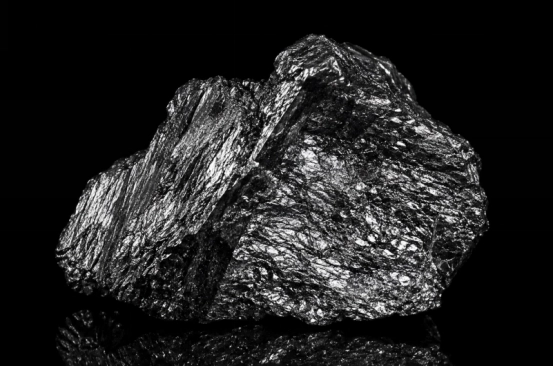
Choosing Graphite Powder for Industrial Lubricants
For most industrial buyers, the shortest reliable selection rule is: match the graphite to the lubricant duty first, then verify the physical data needed to reproduce dispersion and film behavior. Define whether the material is intended for a dry-film coating, anti-seize compound, release aid, grease additive, or another friction-control process. Record the operating temperature, contact pressure, sliding or forming motion, substrate, and application method. These details determine whether a coarse, easy-to-handle powder or a finer, more readily dispersed grade deserves testing.
Carbon content remains important because it helps describe the mineral grade and the likely ash burden, but it does not predict every result in a formulation. Two powders with similar fixed carbon can behave differently when their particle-size distributions, flake morphology, moisture, or agglomeration differ. Treat the first quotation as a specification discussion, not as proof that one grade will work in every lubricant.
How Grade and Lubricant Duty Work Together
Grade selection becomes clearer when the intended duty is written in practical terms. Use the following table as a screening framework, not as a substitute for application testing.
| Lubricant duty | Questions to ask first | Grade-screening direction |
| Dry-film or high-temperature additive | Will the powder face heat, load, and repeated sliding with little carrier liquid? | Screen a high-carbon graphite grade and compare film continuity, wear, and application stability. |
| Anti-seize or release compound | Does the material need to spread over a surface and remain available during assembly or forming? | Compare morphology, particle-size distribution, and carrier compatibility rather than carbon content alone. |
| General grease or oil additive | How will the powder enter the base fluid, and will it stay suspended during storage and use? | Screen both high- and medium-carbon options at matched loadings, then measure dispersion, settling, friction, and wear. |
| Cost-sensitive industrial formulation | Is the target a balanced performance level rather than the maximum specification? | A medium-carbon graphite grade may be a logical comparison point, subject to the same process and performance tests. |
This framing prevents a second buying mistake: selecting a grade because it sounds premium without defining what “better” means in the process. For a dry-film coating, film coverage and adhesion may dominate. For a grease, pumpability, storage stability, and re-dispersion can matter more. For a release compound, transfer to the workpiece may be unacceptable even if the powder reduces friction in a bench test.
The final decision should be based on matched trials. Keep the base formulation, loading, mixing energy, test temperature, load, speed, and measurement method consistent. If the material is being evaluated for a new process, use a small sample before discussing bulk supply and document any change in viscosity, sedimentation, residue, wear, or surface finish.
How Particle Size Controls Dispersion and Film Formation
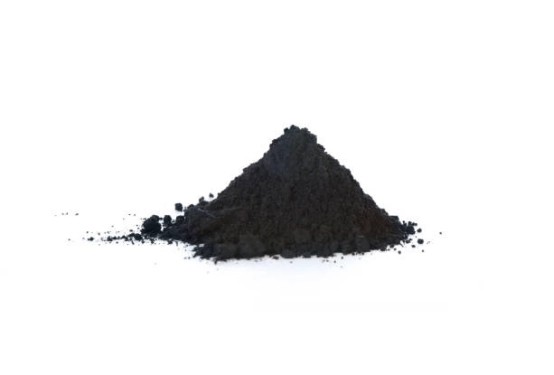
Particle size is often the difference between a graphite quotation that is comparable and one that is not. “80 mesh” or “325 mesh” describes a sieve fraction, but it does not fully describe the distribution within that fraction. Ask for D10, D50, and D90 when the powder must disperse consistently. D50 is the median particle size; D10 and D90 help show how much fine and coarse material sits around that median. Also ask how the measurement was made, because laser diffraction, sieve analysis, and sample preparation can produce non-equivalent results.
Coarser particles may be easier to handle and can suit applications where a robust surface layer is acceptable. Finer particles can improve coverage and reduce visible grit, but they may increase dust, agglomeration, surface-area demand, or mixing energy. Neither direction is automatically better. A fine powder that forms soft agglomerates can disperse worse than a coarser, well-deagglomerated grade.
For example, two samples may both be described as “325 mesh,” while one has a narrow distribution and the other contains a meaningful coarse tail. In a high-shear mixer, that coarse tail may leave streaks or settle rapidly; in a dry-film process, an overly fine fraction may change spray behavior or require a different carrier balance. Use a simple screening matrix: record D10/D50/D90, moisture, mixing time, visible agglomerates, settling after a defined interval, and the final friction or wear result.
What Quality and Supplier Data Should You Verify?
Before approving a graphite powder supplier, request a specification that can be checked at incoming inspection. At minimum, ask for:
- Fixed carbon, ash, moisture, and volatile matter, with units and test methods.
- Particle-size distribution, including D10, D50, D90 or a clearly defined sieve method.
- A description of morphology, flake character, and visible agglomeration.
- Relevant elemental impurities for the lubricant, substrate, and downstream process.
- Lot or batch identification and a sample-to-bulk consistency statement.
- Packaging size, moisture protection, storage conditions, and shipment configuration.
- A representative sample large enough to run the actual mixing and application process.
The test method matters as much as the number. A fixed-carbon result without the associated ash method, or a mesh label without sample-preparation details, can create false equivalence between suppliers. For broader background on comparing natural graphite properties and application requirements, use the natural graphite powder selection criteria as a starting point, then add the tests specific to your lubricant.
FAQ
The questions below cover common edge cases that arise before a buyer requests samples or a quotation.
Is Natural Graphite Suitable for Every Lubricant?
No. Suitability depends on lubricant chemistry, temperature, load, electrical requirements, substrate, and dispersion process. Natural graphite can be a useful candidate, but it should be validated in a controlled formulation or component test before a production decision.
Is Mesh Size Enough to Specify Graphite Powder?
Usually not. Mesh is a convenient screening label, but it does not show the full distribution or how the sample was prepared. Ask for the measurement method and D10, D50, and D90 when dispersion, settling, surface coverage, or finish quality matters.
Can High-Carbon Graphite Reduce Additive Loading?
It may change the loading needed, but no universal reduction should be assumed. Compare friction, wear, stability, residue, and processability at matched test conditions. A higher carbon number is useful only when it improves the performance or processing metric that matters to your application.
What Should Be Tested Before a Bulk Order?
Test a representative sample in the real mixing and application process. Compare dispersion time, agglomeration, settling, viscosity or flow, friction, wear, and surface finish. Before release, confirm that the agreed specification matches the lot-level data supplied for the bulk shipment.
What Information Should I Send for a Graphite Powder Quote?
Send the lubricant type, operating temperature and load, target particle-size range, fixed-carbon and impurity limits, mixing equipment, packaging requirement, annual volume, destination, and documentation needs. Those details make supplier comparisons more meaningful and reduce avoidable sample iterations.
Request a Graphite Powder Specification Review
If you are screening graphite powder for an industrial lubricant, send your lubricant duty and target specification through send your lubricant duty and target specification. Include the process temperature, load, application method, particle-size preference, fixed-carbon requirement, packaging, annual volume, and destination. A clear RFQ lets the technical discussion begin with comparable data and identifies which points still need sample validation.