
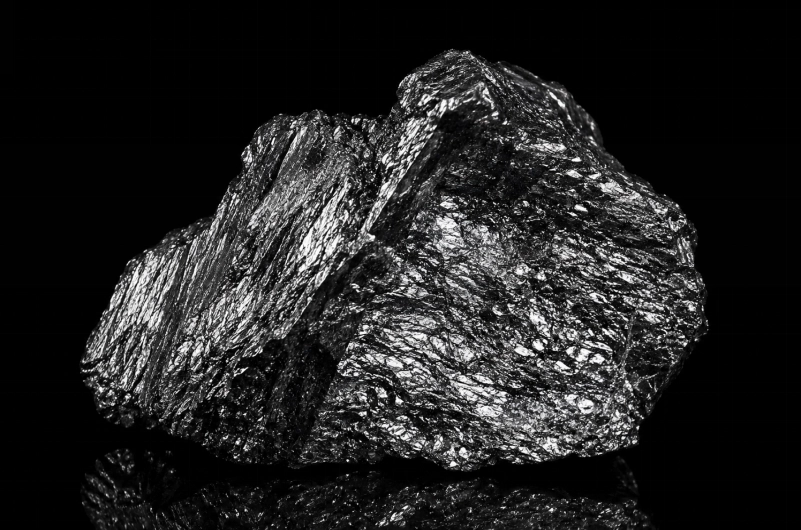
Natural graphite powder plays a critical role in industries where conductivity, lubrication, thermal stability, and chemical resistance directly affect product performance. However, selecting the right grade requires more than comparing basic specifications.
Decoding the Technical Specifications of Natural Graphite
Selecting the proper natural graphite powder is not merely about finding the highest purity. It is also not just about choosing the smallest particle size. Instead, buyers must understand how these details affect actual industrial performance. Engineers often work with lubricants, refractories, or conductive materials. They know that a minor change in carbon content or particle distribution can easily ruin or save a whole process.
Understanding the Role of Fixed Carbon Content
Fixed carbon is what defines graphite’s identity. It tells you how much actual carbon remains after removing moisture, volatiles, and ash. A high fixed carbon percentage means fewer impurities and better stability under stress. Graphite’s fixed carbon is between 80-93% and is called medium carbon graphite. That range already offers excellent conductivity, lubricity, and chemical resistance for most industrial uses.
When carbon levels rise above 92%, abrasion drops noticeably because silica and iron impurities are minimized. The 93-grade products have a fixed carbon content of at least 93%, while the 92-grade products have a fixed carbon content of at least 92%. Choosing between these grades often comes down to cost versus tolerance for contamination. For instance, in metallurgy additives where purity directly affects alloy quality, paying for higher fixed carbon makes sense. But for general lubrication or casting applications, medium carbon grades strike a good balance.
Why Particle Size Distribution Matters More Than Average Size
Particle size defines how graphite behaves when it moves—how it packs, conducts heat, or slides across metal. Engineers frequently look at the average mesh size. However, uniformity among all particles is actually much more important. An uneven distribution can cause inconsistent conductivity in protective coatings. It might also lead to uneven wear inside machine bearings.
Fine powders, such as -325 mesh, coat surfaces very evenly. They help to create much smoother films. On the other hand, larger flakes like 80-150 mesh keep their mechanical strength under heavy pressure. Thanks to advanced processing technologies, a good supplier reliably provides graphite powders ranging from 80 mesh to -325 mesh. These materials serve various industrial applications well. Examples include new energy batteries, durable refractory materials, and tough sealing components. Laser diffraction analysis measures this distribution much more precisely than basic sieving. This modern method reveals how particles interact dynamically, rather than just showing their static sizes.
Identifying Your Specific Application Requirements
Every application draws out different aspects of natural graphite’s character. The same powder that excels in an anode might fail as a lubricant.
Lubrication and Friction Management
Graphite can easily form a dry film lubricant. This film survives extremely high temperatures, making the mineral essential for heavy machinery. The specific flake size dictates how firmly it sticks to metal surfaces. It also controls how much the friction coefficient drops under heavy loads. Oils burn off very quickly in harsh places like steel mills or foundries. In these spots, fine graphite keeps things lubricated even at red hot heat levels.
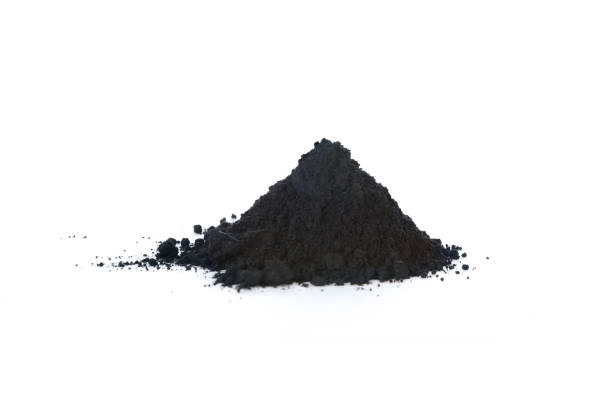
A strong synergy also appears when graphite mixes with greases or oils. This blend boosts the overall film strength without giving up thermal stability. Medium carbon grades like LZ100-93 are frequently chosen for this purpose. They provide great smoothness and solid resilience without adding too much cost.
Thermal and Electrical Conductivity Needs
In thermal management systems or battery components, conductivity rules everything. The crystalline structure of natural graphite allows electrons to flow efficiently along its planes. Orientation matters; aligned flakes conduct better in one direction than another.
For battery anodes or conductive coatings, only high purity powders work effectively since even trace impurities interfere with charge transfer. Medium carbon graphite has good electrical conductivity and thermal conductivity, high melting point, good lubricity, plasticity, chemical stability, and resistance to oxidation. Those properties make it versatile across industries—from flexible electrodes to anti-static coatings on polymer films.
Evaluating the Morphology: Flake vs. Vein vs. Amorphous
Not all natural graphite looks—or behaves—the same. Flake graphite is crystalline and expands when heated; that’s why gasket manufacturers love it for sealing under pressure changes. Amorphous graphite lacks defined crystal structure but remains inexpensive and chemically stable—ideal for foundry facings where surface finish matters more than conductivity.
Vein graphite rests somewhere in the middle. It is dense like the amorphous variety. However, it remains crystalline enough for critical electrical parts. These components require a compact form but cannot sacrifice steady performance.
Critical Quality Indicators Beyond the Data Sheet
Numbers on a datasheet tell part of the story but not all of it.
What Hidden Impurities Could Ruin Your Process?
Ash content composition—especially silica or iron—can trigger unwanted reactions during sintering or alloying stages. Moisture levels are equally dangerous; they affect flowability during mixing and shorten shelf life if storage isn’t controlled properly. Even pH plays a role when blending with binders; mismatched acidity can destabilize formulations over time.
All grades have a maximum volatile content of 1.5% and a maximum moisture content of 0.5%. These limits ensure predictable handling characteristics during production runs where precision dosing matters.
Logistics and Sustainable Sourcing for Long Term Stability
The supply chain behind your natural graphite matters as much as its chemistry.
Ensuring Supply Chain Reliability from Mine to Factory
A consistent geological source ensures uniform mineralogy batch after batch—a crucial factor for large scale production lines that can’t afford recalibration every shipment. PERMANENT MINERALS is a Tanzania registered integrated mining enterprise. Its vertically integrated model covers mining through precision screening under automated control systems to maintain product consistency across shipments.
Adhering to the principle of “professional service and timely supply,” we have established multiple warehouses covering nearly 10,000 square meters, enabling us to deliver goods stably even during market fluctuations. That kind of infrastructure prevents downtime when global logistics tighten—a practical advantage many overlook until delays hit production schedules.
Environmental Standards and Compliance
Responsible sourcing isn’t just ethical—it protects long term access to resources. PERMANENT MINERALS adheres to the philosophy of “Green Development, SharedValue,” promoting efficient resource utilization through technological innovation whilerigorously implementing ESG (Environmental, Social, Governance) standards to minimizeecological impact. Compliance documentation also provides reassurance that materials meet international safety standards demanded by clients across sectors like energy storage or aerospace manufacturing.
FAQ
Q: What does “fixed carbon” mean in natural graphite?
It measures the percentage of pure carbon remaining after removing volatile matter and ash—higher values mean purer material with better performance consistency.
Q: Why is particle size distribution important?
Uniform distribution ensures stable conductivity and lubrication properties; irregular sizing leads to uneven performance in coatings or composites.
Q: Which type of natural graphite suits battery production?
High purity flake or vein types are usually the best choices. They must have very minimal ash content. Manufacturers prefer them because they offer superior electrical conductivity and excellent structural order.
Q: How does sourcing affect quality?
Stable geological deposits help immensely. When paired with integrated processing systems, they greatly reduce the physical differences between separate batches. This consistency is absolutely critical for strict industries. Fields like modern electronics or heavy metallurgy demand very tight manufacturing tolerances.