
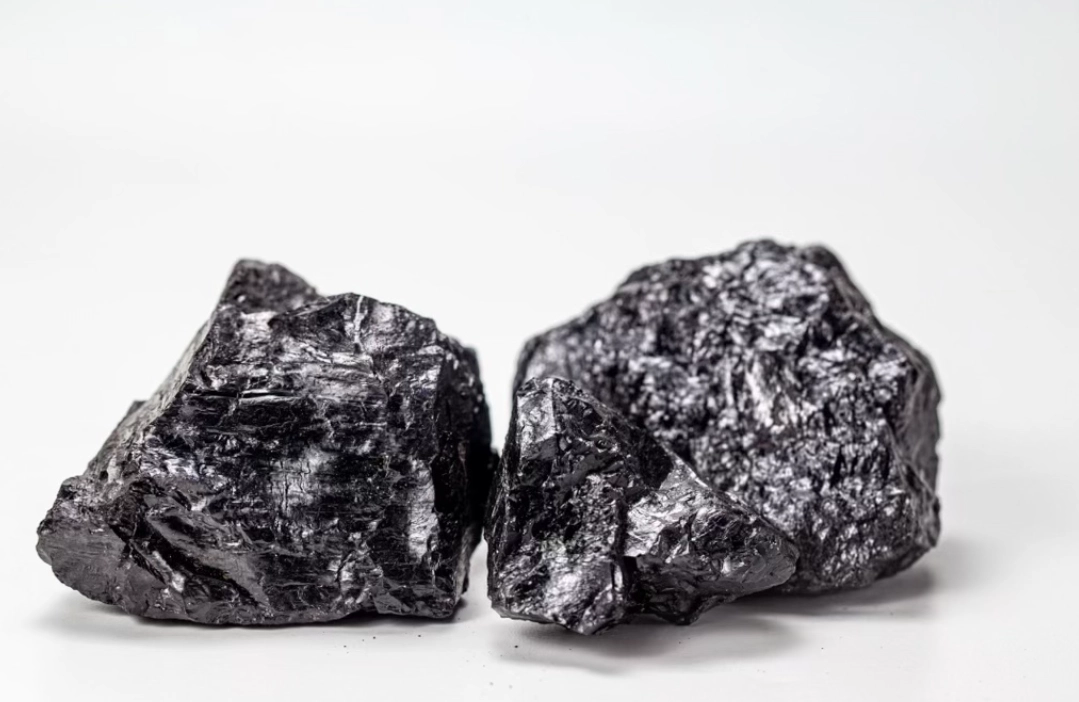
The graphite supply chain in 2026 is incredibly complex. Almost every month brings news about battery demand, export controls, African graphite, synthetic graphite prices, and new processing projects. However, the real problem is actually simpler, yet more difficult to solve: a stable graphite supply still depends on the graphite’s origin, processing methods, and whether suppliers can guarantee consistent specifications for each shipment.
For industrial buyers, that matters more than a broad market headline. A refractory plant does not buy “graphite demand growth.” A battery material processor does not buy a market forecast. They buy fixed carbon, particle size, moisture control, ash limits, packing reliability, and delivery dates that do not collapse during a busy shipping season.
Why Is the Graphite Supply Chain Still Under Pressure in 2026?
Graphite looks abundant on paper. That is the part many reports get right, but only halfway. Natural graphite production is expected to keep rising, with industry data showing global output moving from about 1,050 kilotonnes in 2010 toward a projected 3,800 kilotonnes by 2030. That sounds comfortable.
At the working level, it is not that comfortable.
The bottleneck sits in the middle of the chain. Mining is one step. Turning graphite concentrate into qualified battery-grade material is another business entirely. Purification, spheronisation, carbon coating, and graphitization require equipment, energy, process control, and long qualification cycles.
Is African Graphite Becoming a Serious Alternative?
African graphite is already part of the global supply chain. Africa, including Tanzania, Mozambique, and Madagascar, holds a meaningful share of global graphite reserves. Statistics indicate that these regions hold approximately 69 million tons of graphite, representing about 21% of the global total. That is enough to attract attention from battery, refractory, and industrial raw material buyers.
Still, reserve size does not load a container. Mines need stable production, roads, power, trained operators, laboratory control, export handling, and financing. This is the part that buyers should watch closely. A new graphite origin is useful only when the supplier can ship repeatable material, not just show a promising deposit map.
How Can Buyers Read Natural Graphite Supply More Realistically?
Natural graphite supply should not be judged only by country of origin. The better question is: what grade can be supplied repeatedly, and for which application?
In a normal procurement discussion, the useful details appear quickly. Fixed carbon range. Mesh size. Flake distribution. Moisture. Impurity profile. Packaging. Loading port. Sample consistency. A serious graphite supplier does not avoid these topics because these are the points that decide whether the material works in production.
PERMANENT MINERALS operates from Tanzania, one of the African graphite regions gaining more attention as buyers look beyond traditional supply routes. Its operation covers mining, ore crushing, flotation purification, mechanical dewatering, high-temperature drying, and precision screening. That kind of integrated production matters. It does not automatically solve every supply risk, but it gives buyers a clearer line of control from ore to finished graphite powder.
What Makes Graphite Pricing So Difficult to Compare?
Graphite is not priced like copper. There is no single global benchmark that lets buyers compare every offer cleanly. Two suppliers may both quote “natural graphite,” but the materials may sit in different parts of the specification matrix.
Flake size changes value. Carbon content changes value. Processing stage changes value. Delivery point changes value. Spherical graphite can cost three to four times more than equivalent flake concentrate before it even reaches a battery cell plant. That gap is not just margin. It reflects processing loss, equipment cost, energy use, and qualification work.
This is where many buying mistakes happen.
A procurement team receives three offers. One looks cheaper. On paper, it wins. After testing, the ash is higher, the particle size distribution is loose, or the moisture level causes problems in storage. Then the “cheap” shipment becomes a production headache. Not dramatic. Just expensive in a quiet way.
A better RFQ should ask for the exact carbon range, particle size, moisture, ash, packaging form, loading quantity, and previous application reference.
How Should Buyers Choose a Graphite Supplier in 2026?
A reliable graphite supplier should be checked from the plant floor backward.
Start with the application. Refractory material, sealing components, conductive additives, lubricants, and battery-related processing do not need the same graphite. Then check whether the supplier’s production process matches the required grade. If the answer stays vague, that is already an answer.
A useful supplier conversation should cover:
- fixed carbon range and test method
- particle size and mesh distribution
- moisture and ash control
- batch-to-batch consistency
- export packing and container loading
- warehouse capacity and delivery planning
PERMANENT MINERALS maintains multiple warehouses covering nearly 10,000 square meters. For overseas buyers, inventory is not a small detail. During market swings or vessel delays, warehouse capacity can be the difference between a delayed shipment and a manageable schedule adjustment.
What Opportunities Are Opening for Graphite Buyers?
The opportunity in 2026 is not about finding one perfect source. That does not exist. The better move is building a supply structure with more than one qualified option. A buyer using graphite raw material every month should not wait until a shortage appears to test a new origin. Battery-related buyers already know this because qualification can take months.
Natural graphite suppliers with mine access, production control, and export experience will become more valuable. Not because every buyer wants to leave established suppliers, but because no buyer wants to depend on one route when graphite demand keeps climbing.
In that sense, 2026 is a practical year. Less hype. More testing. More supplier audits. More attention to high carbon graphite, medium carbon graphite, and the real numbers behind each shipment.
For buyers reviewing graphite supply chain risk, PERMANENT MINERALS offers a Tanzania-based natural graphite supply option with integrated processing and industrial-grade product ranges. The next useful step is not a slogan.
FAQ
Q1: Why is the graphite supply chain important in 2026?
A: Graphite demand is rising, but processing capacity remains concentrated. Buyers need stable sources, clear specifications, and more diversified supply routes.
Q2: Is natural graphite still important for industrial buyers?
A: Yes. Natural graphite remains important for refractory materials, sealing components, conductive uses, lubricants, and battery-related processing.
Q3: What should buyers check before ordering graphite raw material?
A: Fixed carbon, particle size, ash, moisture, impurity level, packing method, sample consistency, and supplier production control should be checked.
Q4: Why is graphite pricing difficult to compare?
A: Graphite prices vary by flake size, carbon content, processing stage, purity, delivery terms, and application requirements.
Q5: Can Tanzania natural graphite support supply chain diversification?
A: Yes, Tanzania natural graphite can support diversification when the supplier has stable mining, processing, quality control, and export capability.