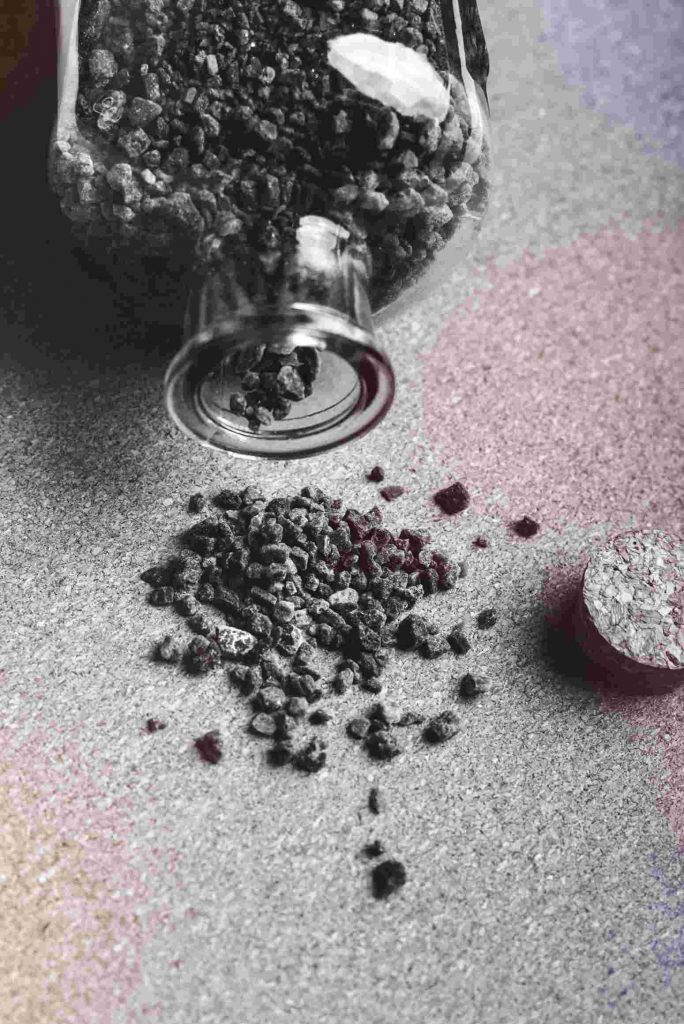
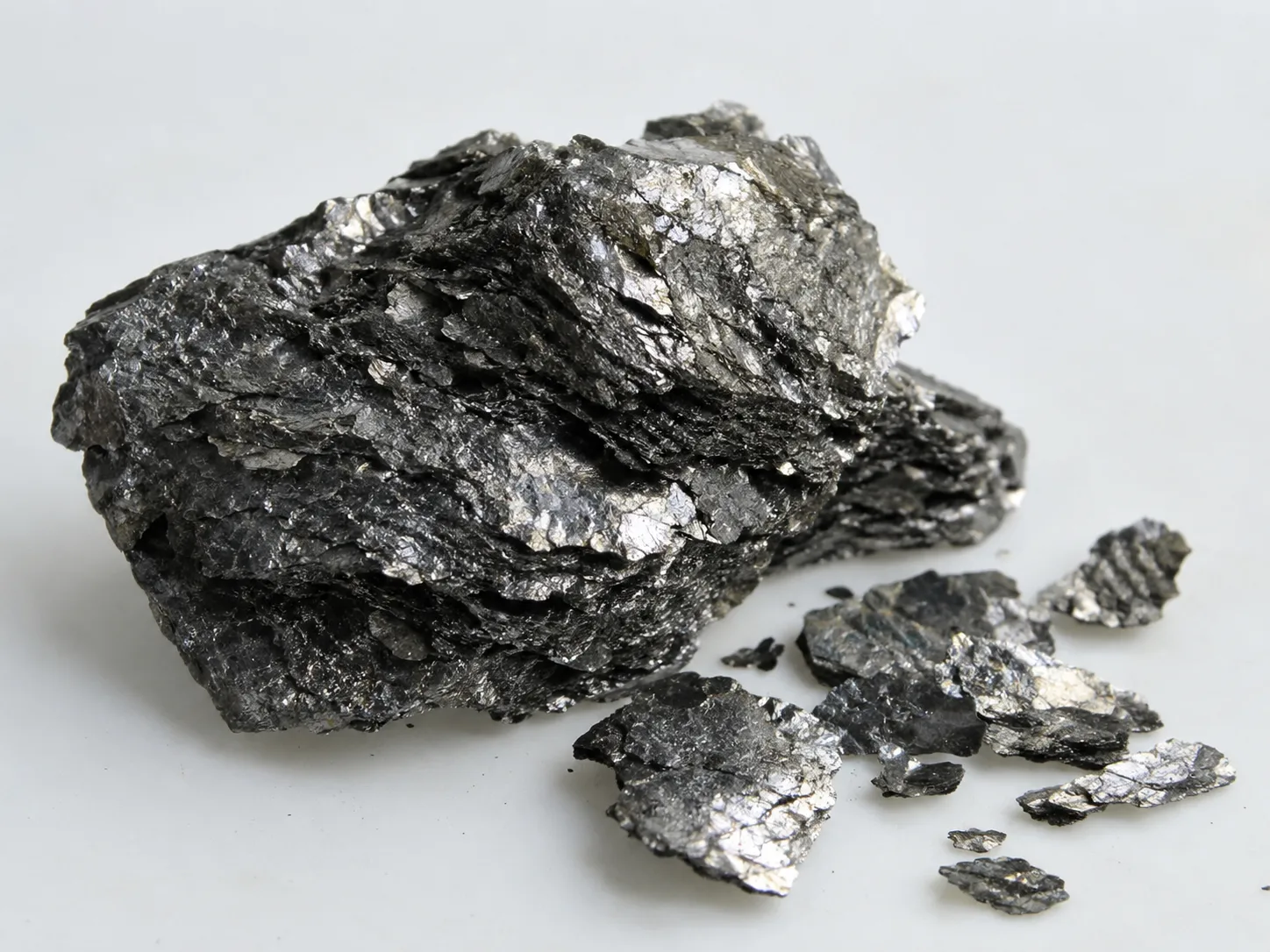
Steel ladles take repeated thermal shocks, aggressive slag and fast metal flow. A small lining weakness can become a breakout risk or an expensive repair. Graphite often decides whether a carbon-containing refractory survives the campaign.
What Is Graphite in Ladle Refractory Formulations?
Graphite is added as a carbon-bearing phase. Its layered crystal structure gives it low wettability with molten metal and slag, helping the lining resist penetration. Thermal conductivity spreads heat through the brick instead of leaving severe hot spots.
Role of carbon in refractory materials
Carbon changes how a refractory interacts with steel and slag. It can reduce chemical attack and slow liquid slag through open pores. In an alumina-carbon brick, graphite helps absorb rapid heating and cooling. The lining still needs a suitable binder and antioxidant package.
Why natural graphite is often selected
Natural flake graphite offers useful thermal and lubricating properties without the cost level of some synthetic grades. The flakes can form a tortuous path that makes slag penetration harder. They also help accommodate movement in the refractory matrix.
The right choice depends on the recipe. A plant may use high-carbon graphite in a slag-line brick and medium-carbon material in a sidewall mix. Review fixed carbon, ash, flake size, moisture and volatile matter together.
Key Selection Criteria for Graphite Used in Steel Ladles
A carbon certificate is only the starting point. Performance depends on behavior during mixing, pressing, heating and exposure to slag. These criteria help compare suppliers.
Fixed carbon content
Fixed carbon indicates how much useful carbon remains after non-carbon components are accounted for. High-carbon graphite commonly falls in the 94–99% range. Medium-carbon graphite is often supplied between 80% and 93%.
A higher number usually means fewer mineral impurities and better corrosion resistance. It does not make 99% correct for every formulation. A controlled medium-carbon grade may give a better cost balance when the mix already contains expensive additives.
Flake size and particle distribution
Flake size affects packing and thermal behavior. Larger flakes can improve resistance to thermal shock because they interrupt crack growth. Fine particles fill gaps and help the mix reach a consistent density.
The useful target is a controlled distribution. Too many fines can make a shipment press differently from the laboratory batch. Ask for the mesh range and test method. Keep distribution stable between lots.
Ash and impurity control
Ash is not a minor detail. Silica, alumina, iron-bearing minerals and alkaline compounds can react with slag or alter the hot strength of the refractory. In a high-basicity steelmaking environment, small chemistry shifts may accelerate corrosion at the slag line.
Set limits for total ash and critical elements. Require a certificate of analysis for each lot. A retained sample helps separate a raw-material issue from a change in steel grade or slag practice.
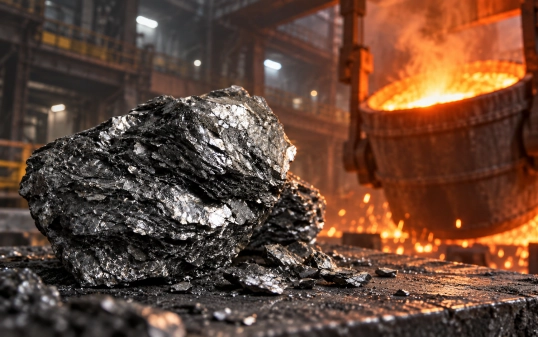
Moisture, volatile matter and oxidation behavior
Graphite should arrive dry and remain dry. Moisture creates handling problems and can disturb binder distribution. Volatile matter may influence firing behavior and gas release during the first heat.
Storage matters. Open bags beside a washdown area can pick up water. Sealed packaging and a clear procedure prevent variation. Antioxidants help, but the graphite still needs suitable purity and surface condition.
Supply reliability and technical documentation
A refractory plant needs more than a spot cargo. Confirm mine origin, processing route, capacity, packaging and lead time. Technical data should cover carbon, ash, moisture, volatile matter and particle size.
PERMANENT MINERALS’ industrial graphite supply connects Tanzanian mining with processing and export service. High-carbon and medium-carbon graphite grades provide buyers with a clear starting point for testing and qualification.
Applications of Graphite in Steel Ladle Refractories
Graphite appears in several ladle components. The dosage and grade change with the local duty. A slag-line brick does not face the same conditions as a bottom impact pad.
Alumina-carbon and alumina-magnesia-carbon bricks
These bricks are common in sidewalls, bottoms and slag lines. Graphite improves thermal shock resistance and reduces wetting by slag. Low ash is especially valuable in the slag line because reactive minerals increase corrosion.
Monolithic and castable refractories
Fine graphite can be added to castables, ramming mixes and hot-repair materials. It may improve thermal conductivity and limit cracking during dry-out and heat-up.
Too much graphite can lower bonding strength or increase oxidation sensitivity. Trial batches should measure flow, density and oxidation depth after firing.
Ladle well blocks, purging plugs and functional components
Functional components see intense heat and metal movement. Graphite-containing formulations can provide stability around steel flow paths and purging areas. Mechanical wear still governs the design.
Refractory repair and maintenance
Graphite powders in repair mixes help a patch adapt to a hot lining and resist immediate metal attack. The repair grade should match the original refractory chemistry; a mismatch can spall during the next cycle.
How Graphite Quality Influences Ladle Performance
The effect is visible in operating data. A lining that survives more heats reduces relining labor and interruptions.
Thermal shock resistance
Flake morphology and particle distribution help dissipate stress during charging and pouring. When the lining expands and contracts repeatedly, a suitable graphite phase can slow crack growth and reduce spalling.
Slag and molten-steel resistance
High-purity graphite limits unwanted reactions. Low wettability makes it harder for slag to adhere and penetrate. The result is often a cleaner working surface after a campaign, especially near the slag line.
Thermal conductivity and temperature control
Graphite moves heat efficiently through the refractory. That can reduce localized overheating and smooth temperature gradients between steel contact zones and the shell.
Service life and total cost
Price per metric ton does not describe the economics. A higher-grade graphite may pay back through fewer repairs and a longer campaign. Compare cost per heat, not only the raw-material invoice.
Practical Graphite Purchasing Checklist for Refractory Manufacturers
- Required fixed-carbon range
- Flake-size and mesh specification
- Total ash and critical impurity limits
- Moisture and volatile-matter limits
- Certificate of analysis for every shipment
- Sampling and inspection procedure
- Packaging format and storage protection
- Minimum order quantity and lead time
- Technical support for formulation trials
- Traceability from mining through processing
Conclusion
Graphite selection affects ladle lining life, slag resistance and thermal shock behavior. Fixed carbon matters. Flake distribution and ash matter just as much. The grade should fit the refractory chemistry and the duty of each ladle zone.
For alumina-carbon bricks, slag-line refractories or repair mixes, request a graphite quotation with the carbon range, mesh size and expected annual volume. PERMANENT MINERALS can provide current specifications and discuss sample availability for qualification work. Buyers can discuss mesh targets, packaging and trial quantities before moving to bulk supply.
Looking for graphite for alumina-carbon bricks, slag-line refractories or ladle repair mixes? Contact PERMANENT MINERALS for current specifications, sample availability and a bulk supply quotation.
FAQ
Q: What fixed carbon level is suitable for steel ladle refractories?
High-carbon graphite in the 94–99% range suits demanding applications. Medium-carbon grades between 80% and 93% may fit less aggressive zones. Selection depends on the recipe.
Q: Is natural flake graphite better than synthetic graphite?
Neither is universally better. Natural flake graphite offers strong thermal properties at a competitive cost. Synthetic graphite may fit tightly controlled chemistry. Testing should decide.
Q: Which graphite impurities should refractory buyers monitor?
Track total ash plus silica, iron-bearing minerals and alkaline compounds. Set limits to match the refractory chemistry.
Q: Can the same graphite grade be used in every ladle component?
Usually not. Slag-line bricks face stronger attack than sidewalls. Flake size, purity and dosage may change by component.